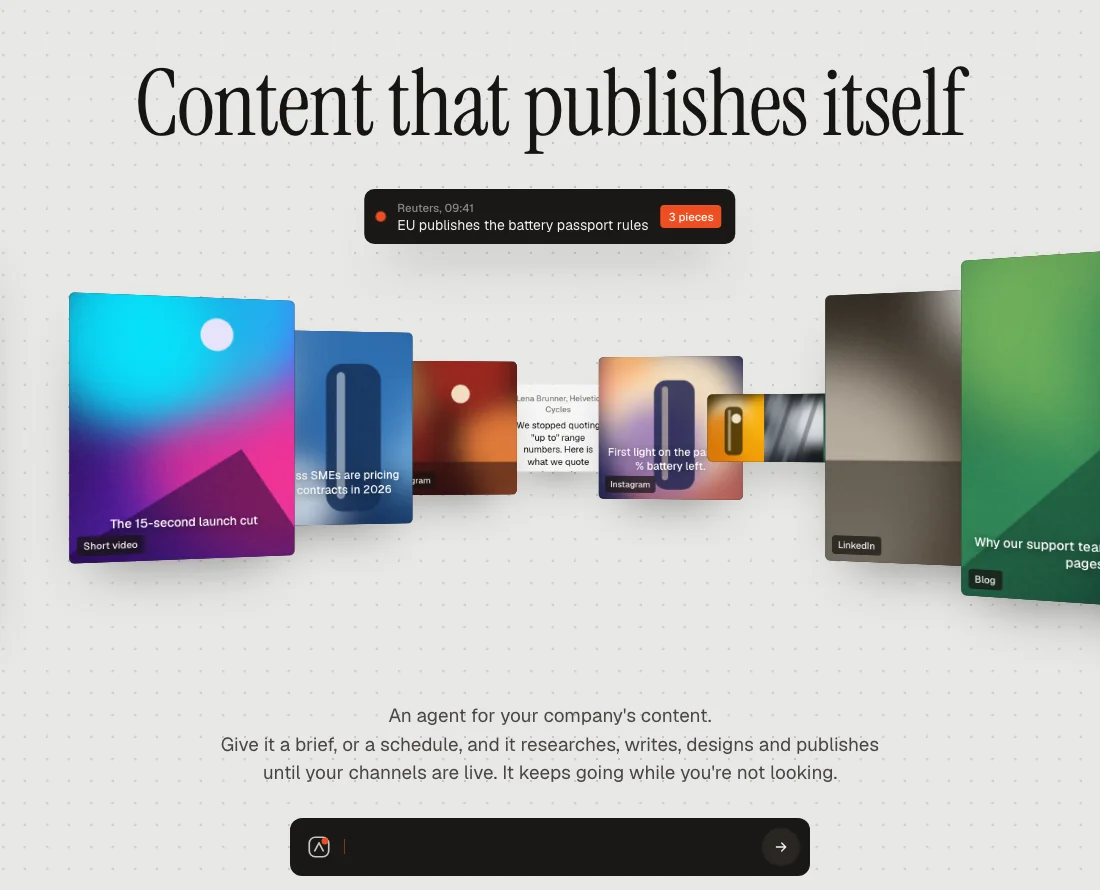
Autocontent is our content agent. A company gives it a brief and a schedule. It researches the topic, writes the pieces for the channel, makes the images, and publishes them or holds them for a person to review.
We tested it on ourselves first. From March to July 2026 it wrote the Mont3 Stream, a blog of notes on AI, and published every post without anyone opening an editor. What it got right and wrong is shaping the second version, now being built.
Product
AutocontentMont3's own, for companies that need a steady flow of content.
Live
Since March 2026At content.mont3.ch, by invitation.
Built
From February 2026First version live in March; the second in progress.
What made it hard
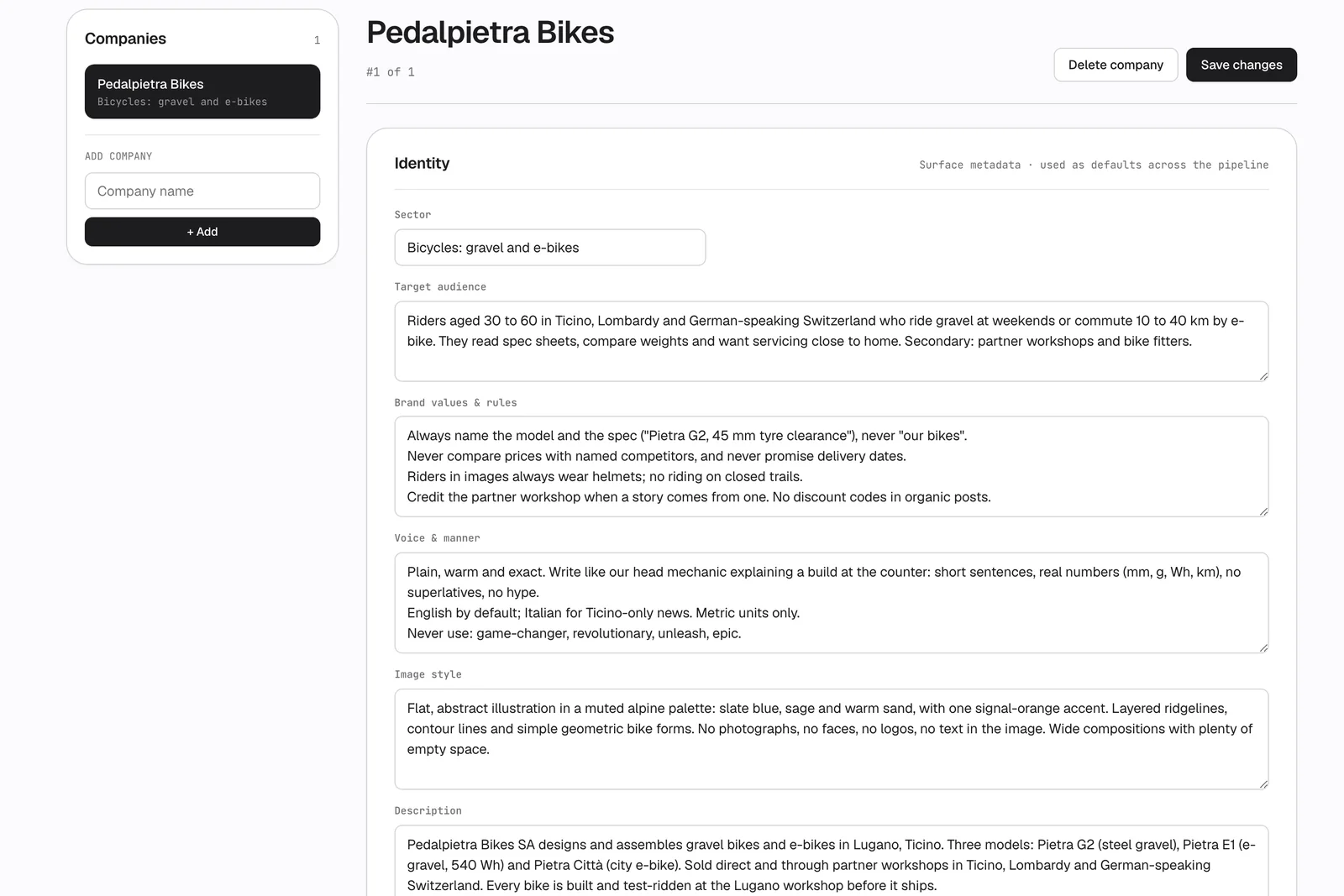
- Sounding like the company. The voice comes from a profile the company fills in: tone, rules, audience, image style, its own documents.
- Links that hold. The writing model changed URLs as it wrote. Every link is now checked against the research and put back as it was.
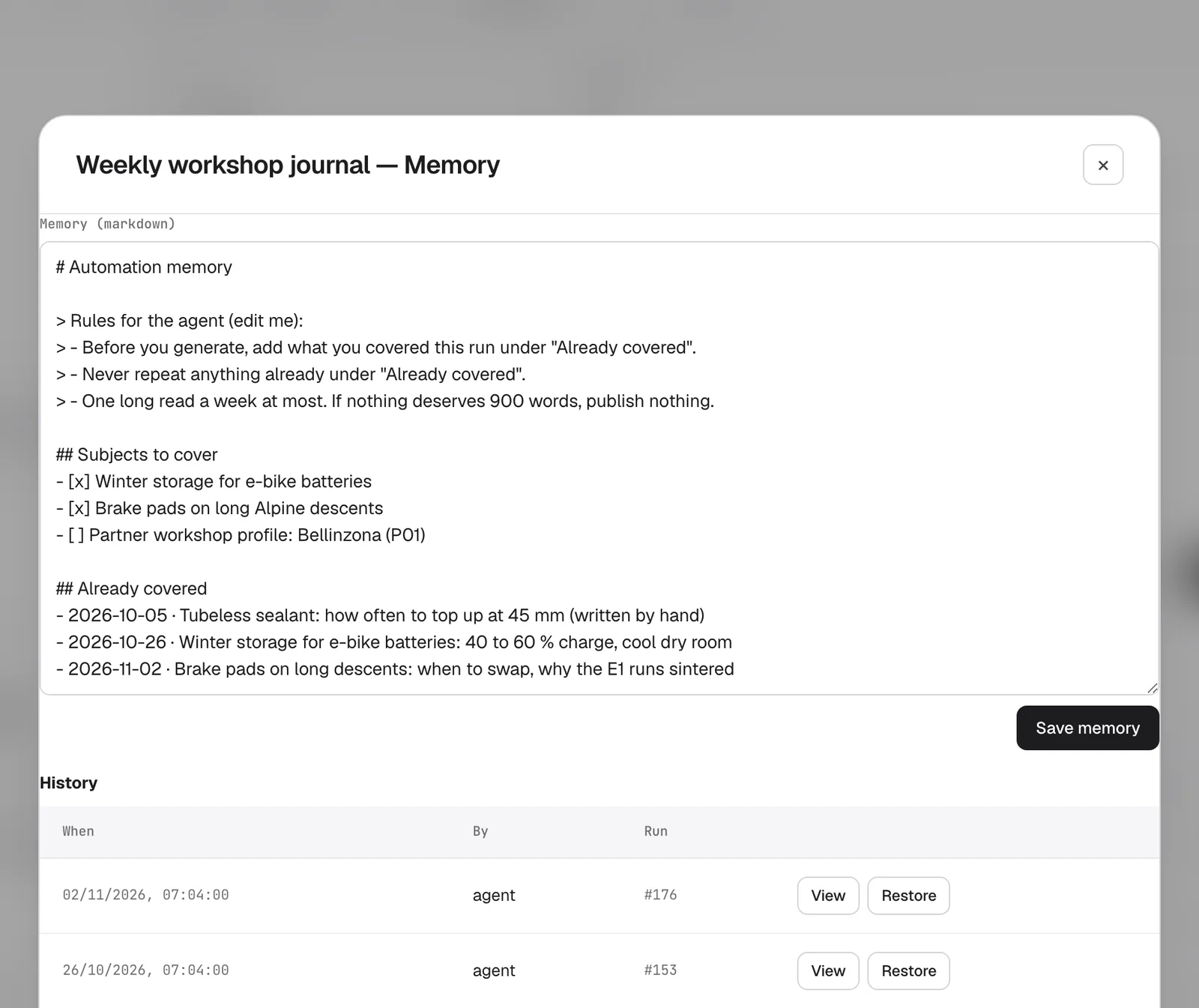
- Saying something new. Left alone, an agent writes about the same story more than once. It needed a memory of what it had already covered.
- Long research. A fixed limit on research rounds cut off most of the heavy runs. The limit now grows with the number of pieces asked for, and a run that reaches it keeps what it already wrote.
- One format per channel. LinkedIn, X, Reddit and a blog each want their own length and structure, returned as data a publisher can use.
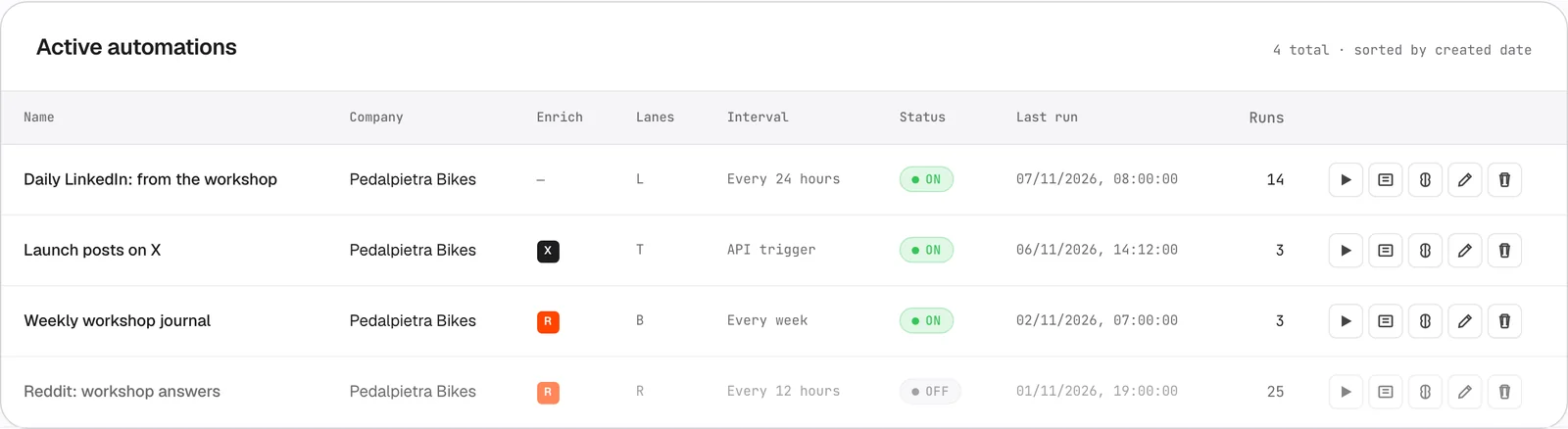
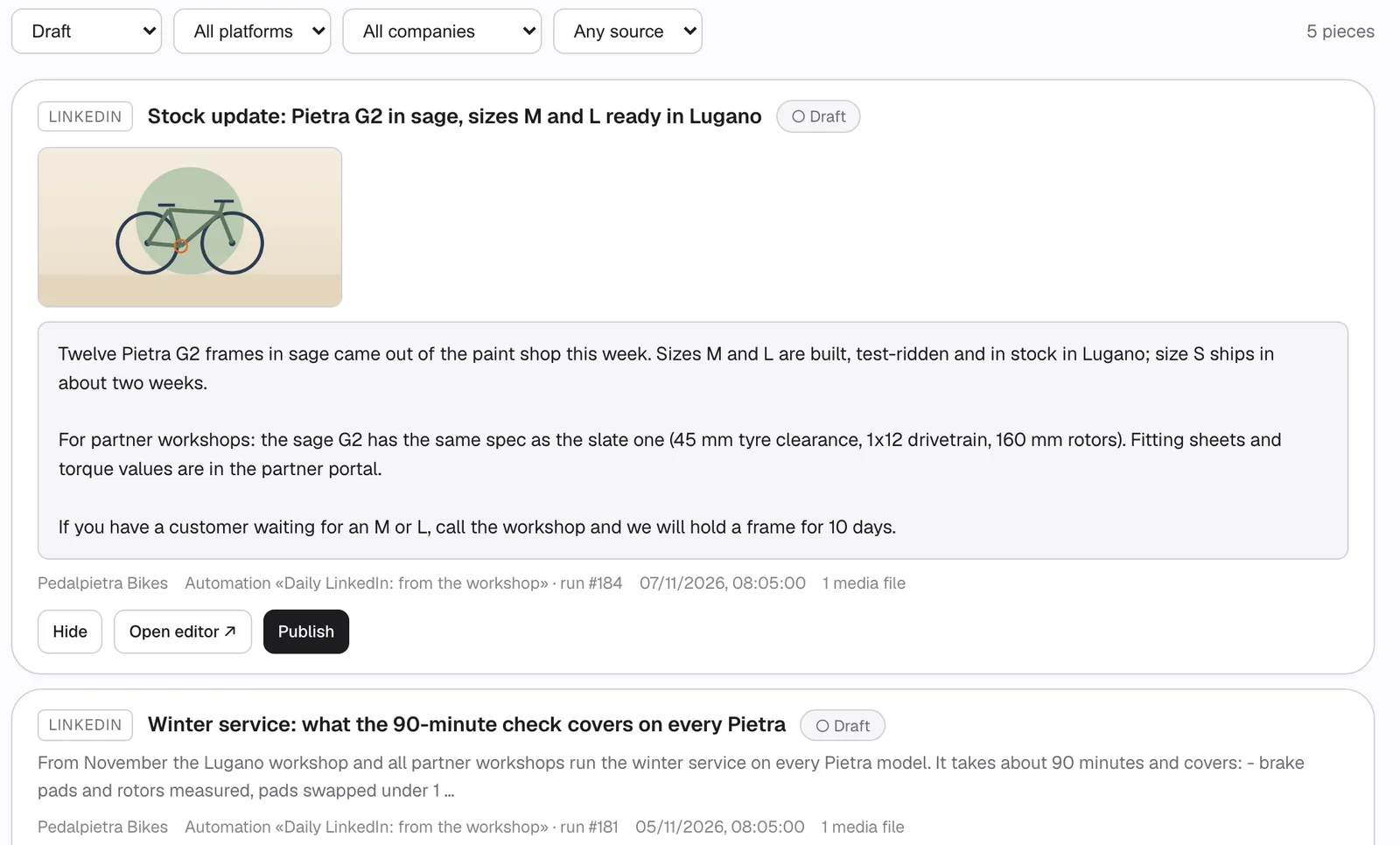
The studio screens below come from a local copy with an invented company, Pedalpietra Bikes. The Stream is real.
What shipped
- Brand profiles. Voice, rules, audience, image style and documents, per company.
- A research chat. It proposes briefs from what it finds, and opens each piece in an editor.
- Automations. From hourly to weekly, or started from outside through an API. Each has one channel, a tone, a length, how many pieces to make, where the images come from, and whether to publish without review.
- A memory per automation. A person can read it and edit it.
- Review and publishing. A review page, and publishing to LinkedIn, X and Reddit, and to a website through a feed.
How a scheduled run works
- Due. Every minute a scheduler checks each automation. One that is due is claimed first, so it never runs twice.
- Memory. The run starts by reading the automation's memory, with what is already covered. The agent can add to it or change one exact passage, never rewrite it whole, and every change is kept.
- Research. An agent works through its tools: news, Reddit, YouTube, prediction markets, crypto markets, the company's own documents and the web.
- Writing. For each piece, a second model writes to a fixed structure. The links are checked against the sources and restored where the model changed them.
- Images. From one of three sources: a media agent, an image model, or a pick from the company's own library.
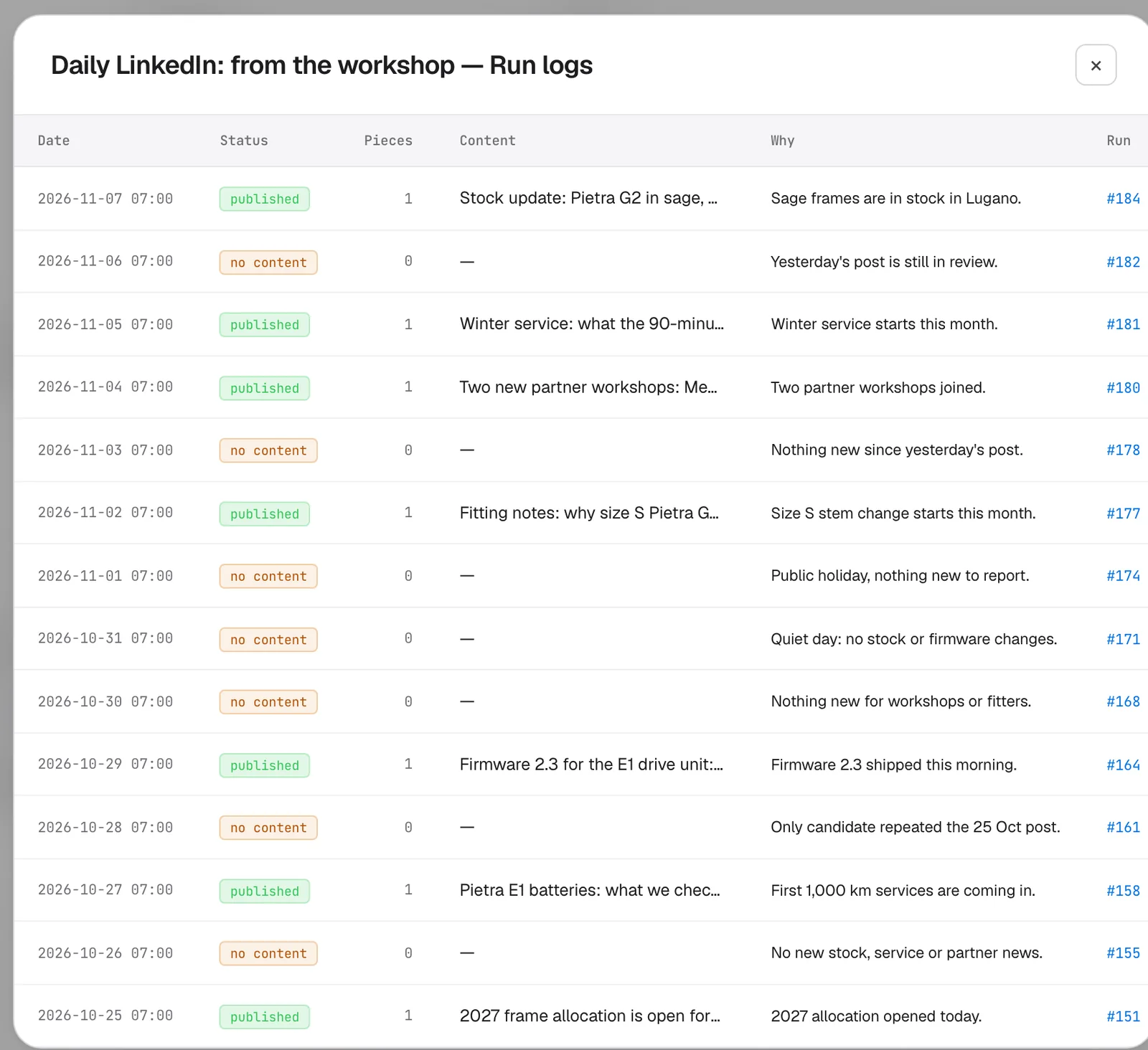
- A run can produce nothing. When there is nothing new to say, it ends without a piece, and the log says so.
How we built it
- February 2026. A general AI dashboard, which became a content studio.
- March. Scheduled automations. The Mont3 Stream started on 12 March.
- May and June. Research as an agent; several companies on one install, each with its own keys; a feed for publishing to websites; the memory per automation.
- July and August. The media agent, publishing to LinkedIn, X and Reddit, and the review page. The agent now decides how many pieces a run deserves, none included.
- September. Automations started from outside, through an API.
- November. A second version, rebuilt from scratch.
Result
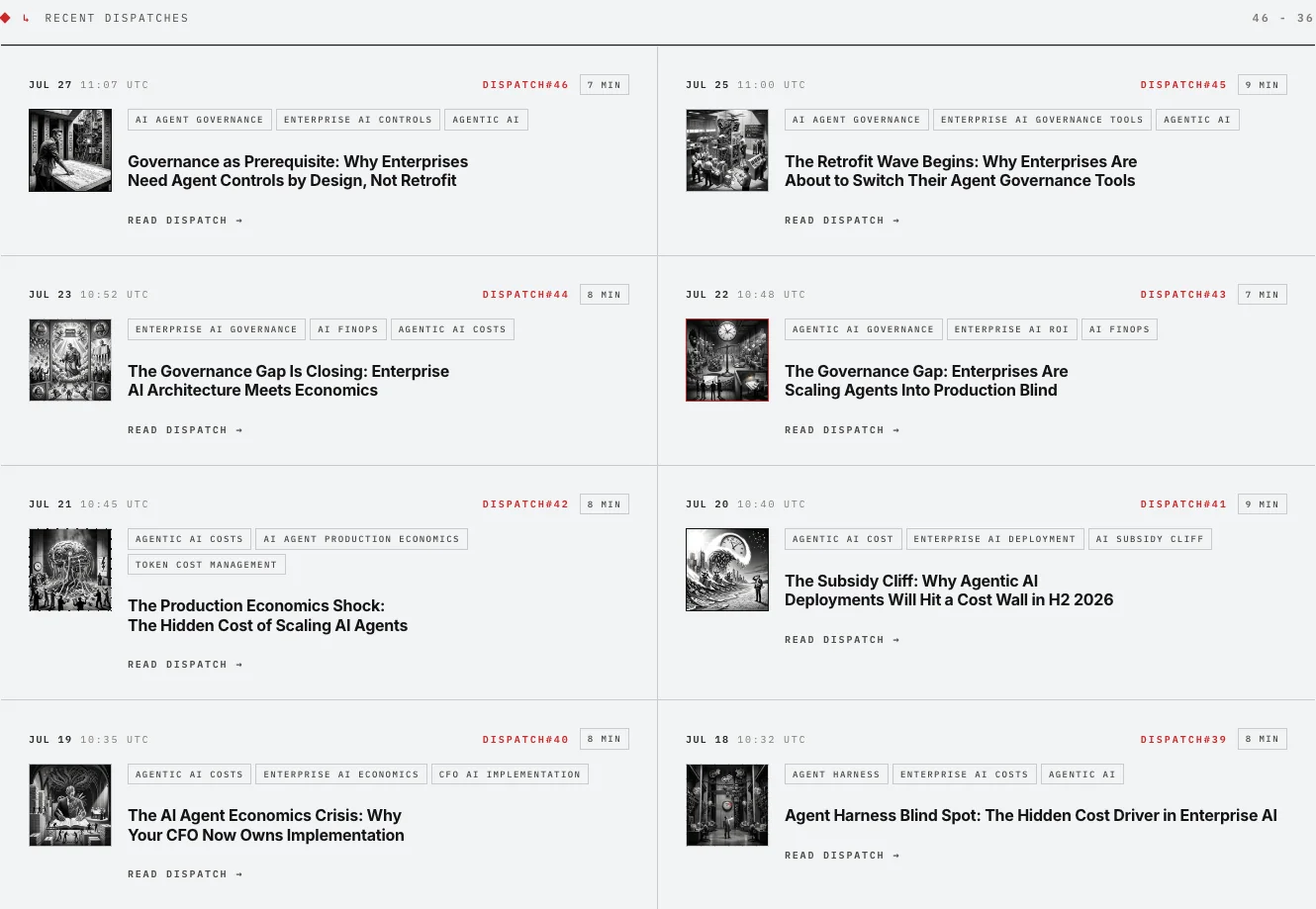
- From 12 March to 28 July 2026 the Mont3 Stream ran on Autocontent alone: research, writing, images and publishing.
- Afterwards we read the whole archive and kept 47 of the 468 posts. They are still online at stream.mont3.ch.
- Companies use it by invitation, each with its own profiles and automations.
Stack
- Backend. Django 5.2, Celery and Redis, PostgreSQL.
- Frontend. React 18, Vite and TypeScript.
- Agents. Claude Haiku 4.5 for research and Claude Sonnet 4.6 for writing, with GPT-4o mini as a fallback.
- Images. Gemini image generation, a Higgsfield media agent, or the company's own library.
- Publishing. LinkedIn, X and Reddit through bundle.social; websites through a feed.
- Keys. Each company's own provider keys, stored encrypted.
Article 039 · 25 November 2026 · 5 min read.
Reply to paolo@mont3.ch.