Standard Chartered has fired the latest shot in banking’s AI revolution, announcing plans to eliminate 7,800 back-office roles by 2030 — a brutal 15% reduction in corporate functions. This isn’t just downsizing; it’s industrial evolution at warp speed, and human workers are getting steamrolled in the process.
The Numbers Don’t Lie: AI Is Eating Jobs Faster Than Ever
CEO Bill Winters didn’t mince words about the bank’s strategy: replacing what he calls “lower-value human capital” with “financial and investment capital tied to automation and AI.” Translation? Humans are becoming too expensive compared to machines that work 24/7 without sick days, vacation time, or healthcare benefits.
“Standard Chartered Kenya’s parent company plans to cut over 15% of its back-office workforce, ~8kroles, by 2030 as it ramps up AI adoption across HR, risk and compliance functions. CEO Bill Winters says the bank is replacing “lower-value human capital” with financial and investment capital tied to automation and AI.” — @MwangoCapital
The affected regions — India, China, Malaysia, and Poland — represent Standard Chartered’s major back-office hubs. These aren’t just arbitrary cuts; they’re strategic eliminations targeting roles that AI can now handle more efficiently than humans.
Banking’s AI Arms Race: A Historical Parallel to Industrial Automation
This wave mirrors the textile industry’s mechanization in the early 1800s, when power looms displaced thousands of hand weavers. Back then, the Luddites smashed machines in protest. Today’s displaced workers don’t have hammers big enough to break algorithms.
Standard Chartered isn’t operating in isolation. The banking sector is experiencing an AI feeding frenzy:
- DBS Bank (Singapore): 4,000 contract roles eliminated over three years
- Meta: 8,000 staff cuts (10% workforce reduction) to fund AI projects
- Amazon: 30,000+ layoffs announced in January
- Oracle: 10,000+ workers eliminated
The pattern is unmistakable: companies are liquidating human capital to finance their AI transformation.
The Efficiency Imperative: Why Banks Can’t Stop This Train
Advanced analytics and artificial intelligence aren’t just buzzwords — they’re profit multipliers. Banks process millions of transactions daily, handle compliance across dozens of jurisdictions, and manage risk portfolios worth trillions. AI systems can:
- Process loan applications in minutes instead of days
- Monitor fraud patterns across global networks in real-time
- Execute compliance checks without human error
- Analyze market data 24/7 without fatigue
When a single AI system can replace an entire department, the economic logic becomes inescapable. Standard Chartered’s move isn’t corporate cruelty — it’s survival strategy in a hyper-competitive market.
The Displacement Dilemma: Where Do 7,800 People Go?
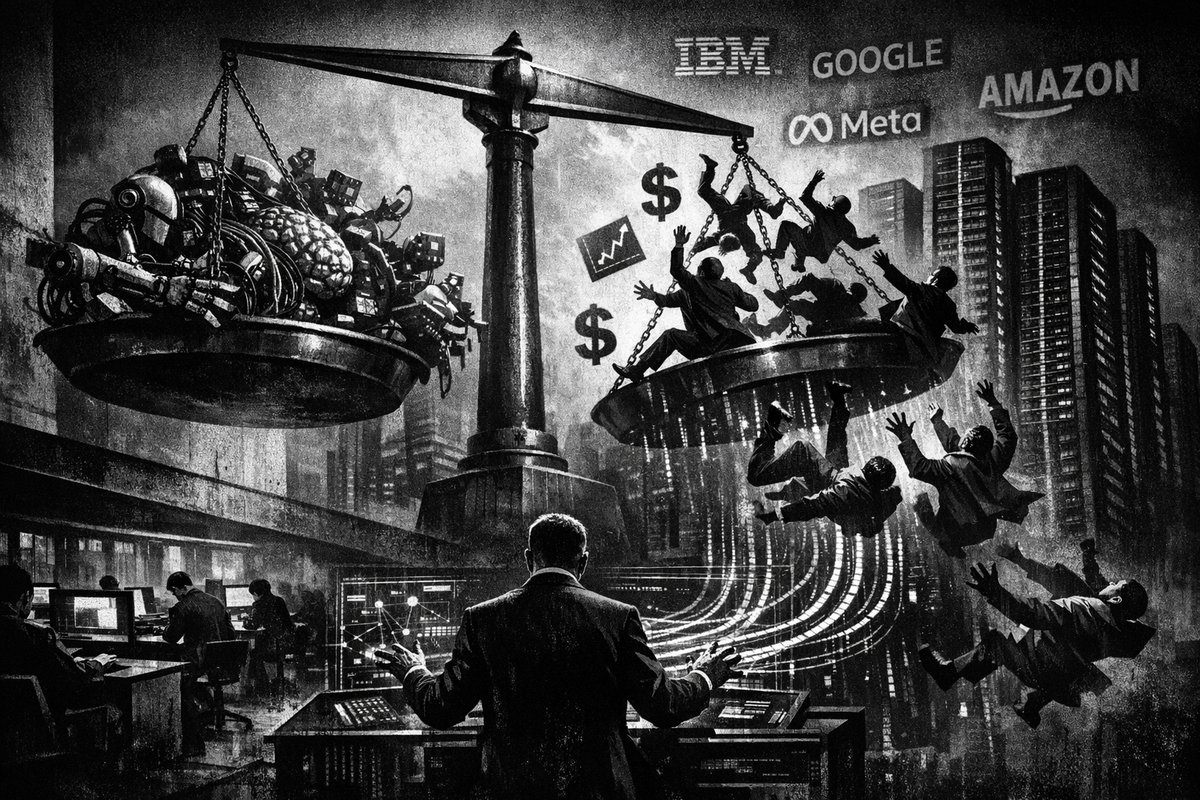
The bank claims it will “move some affected workers to other roles” — corporate speak for “we’ll try to find spots for a few, but most are on their own.” History suggests this optimism is misplaced. When General Motors automated its assembly lines in the 1980s, displaced workers rarely found equivalent positions.
The jobs being eliminated — back-office processing, compliance monitoring, risk assessment — require specific skills that don’t easily transfer to AI-resistant roles like relationship management or complex problem-solving.
“LAYOFF ALERT: STANDARD CHARTERED 🚨 Cutting 7,800 back-office jobs. British HQ, operates mostly in Asia, Africa and Middle East. CEO Winters: ‘We don’t have job losses, but we do have job role reductions in favor of the machines.’ Wait, what?” — @LayoffAI
The Productivity Paradox: More Output, Fewer Workers
Standard Chartered’s strategy targets higher income per employee — a metric that sounds positive until you realize it’s achieved by eliminating the denominator, not necessarily growing the numerator. This echoes the 1990s corporate restructuring wave, when companies like IBM and AT&T shed hundreds of thousands of workers while claiming “increased efficiency.”
The difference today is speed and scope. AI implementation happens faster than industrial retooling, and affects white-collar workers who previously considered themselves automation-proof.
What This Means for the Global Workforce
Standard Chartered’s announcement represents more than job cuts — it’s a preview of the post-human economy. When one of the world’s major banks openly discusses replacing human workers with algorithms, it signals that no industry is immune.
The writing is on the wall, written in code that most humans can’t read. The question isn’t whether AI will displace workers — it’s how fast, and whether society can adapt before the displacement becomes catastrophic.
The automation revolution is here, and it’s not waiting for permission.
Published in Stream · Dispatch #350 · May 19, 2026 · 4 min read.
Reply to paolo@mont3.ch - every email gets a human answer within 24h.