The financial markets are experiencing their most dramatic technological transformation since the introduction of electronic trading in the 1970s. Artificial intelligence is no longer confined to experimental trading algorithms or back-office operations—it has penetrated every corner of global financial markets, fundamentally reshaping how money moves, decisions are made, and risks are managed.
This isn’t just another tech upgrade. We’re witnessing a systemic shift comparable to the mechanization of manufacturing during the Industrial Revolution, except this time, the assembly line is made of algorithms, and the factory floor spans every major financial center from New York to Tokyo.
The Scale of AI Integration in Modern Finance
Apollo Global Management’s recent observations highlight what industry insiders have known for months: AI adoption in finance has crossed the critical mass threshold. Unlike previous technological adoptions that took decades to mature, AI integration is happening at unprecedented speed across multiple market segments simultaneously.
Consider the historical precedent: when electronic trading systems first emerged in the 1970s, it took nearly 20 years for them to become dominant. The transition from open outcry to algorithmic trading was gradual, giving market participants time to adapt. Today’s AI revolution is compressing that timeline into months, not decades.
The current market environment presents unique challenges that make AI adoption not just advantageous, but necessary for survival:
- Unprecedented market volatility requiring split-second decision-making
- Complex geopolitical factors affecting asset pricing across multiple time zones
- Regulatory compliance demands that exceed human processing capabilities
- Risk management requirements spanning diverse asset classes and jurisdictions
Market Stress Drives AI Acceleration
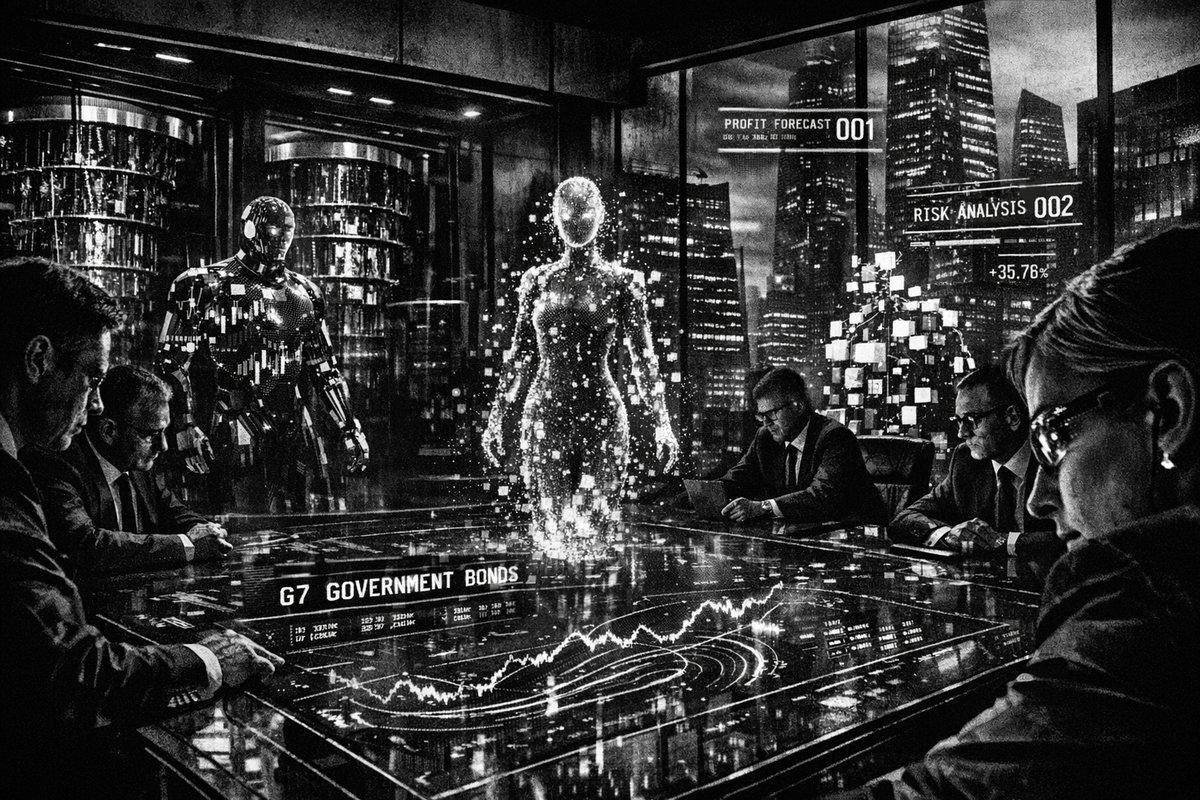
The financial markets of 2026 face pressures that would have been unimaginable just five years ago. Government bond yields have surged to levels not seen in over two decades, creating ripple effects across every asset class. This market stress is accelerating AI adoption because human traders and analysts simply cannot process the volume and complexity of information required to navigate these conditions effectively.
“G7 government bond yields have surged to their highest levels in more than 20 years, driven by: 1) renewed inflationary pressure from elevated energy prices as the Middle East conflict disrupts global oil supply, 2) persistently large government deficits requiring ever-increasing bond issuance, 3) the end of central bank quantitative easing with the Fed balance sheet potentially shrinking, and 4) investors demanding higher term premiums and inflation premiums amid deglobalization and increased geopolitical fragmentation.” — @dlacalle_IA
This multi-factor crisis environment is precisely where AI systems excel. Unlike the 2008 financial crisis, which was primarily driven by mortgage-backed securities and could be understood through traditional risk models, today’s challenges require processing vast amounts of unstructured data—from satellite imagery of oil facilities to social media sentiment analysis to real-time geopolitical intelligence.
The Technology Behind the Transformation
Machine learning algorithms now handle everything from high-frequency trading to credit risk assessment. But the real breakthrough isn’t in any single application—it’s in the integration of AI across entire financial ecosystems.
Modern AI financial systems operate on three levels:
Level 1: Operational AI handles routine tasks like trade settlement, compliance monitoring, and customer service. This is table stakes—every major financial institution has implemented these capabilities.
Level 2: Analytical AI processes market data, identifies patterns, and generates trading signals. This is where most firms are currently focusing their efforts, with mixed results depending on execution quality.
Level 3: Strategic AI makes autonomous decisions about portfolio allocation, risk management, and market timing. Only the most advanced firms have reached this level, but they’re gaining significant competitive advantages.
The firms operating at Level 3 aren’t just using AI as a tool—they’ve restructured their entire operations around AI capabilities. This represents a fundamental shift in business model, similar to how Amazon transformed from an online bookstore into a cloud computing giant.
Historical Parallels: When Technology Reshapes Finance
The current AI revolution mirrors three previous transformative periods in financial history:
The Telegraph Era (1850s-1870s): Instant communication across continents created the first truly global markets. Information that previously took weeks to travel now moved in minutes, fundamentally changing how prices were discovered and arbitrage opportunities exploited.
The Computer Era (1960s-1980s): Electronic data processing enabled complex calculations and record-keeping at unprecedented scale. This period saw the birth of modern portfolio theory, derivatives pricing models, and quantitative finance.
The Internet Era (1990s-2010s): Online trading democratized market access while creating new forms of systemic risk. The speed of information flow increased exponentially, but human decision-making remained the bottleneck.
Today’s AI Era represents the removal of that final bottleneck. For the first time in financial history, decision-making speed can match information processing speed. This creates entirely new market dynamics that we’re only beginning to understand.
The Risks Nobody Wants to Discuss
Systemic risk in AI-driven markets isn’t just about individual algorithms making bad decisions—it’s about the interconnectedness of AI systems creating new forms of market fragility. When human traders dominated markets, their cognitive limitations actually provided a form of circuit breaker during extreme events. AI systems don’t have those same limitations.
The flash crash of May 6, 2010 offers a preview of what can happen when algorithmic systems interact in unexpected ways. That event lasted just 36 minutes but wiped out nearly $1 trillion in market value. Today’s AI systems operate at speeds that make that crash look slow-motion.
Moreover, the concentration of AI development among a handful of technology companies creates new dependencies. When the same underlying AI models power multiple financial institutions, a flaw in the base technology can propagate across the entire system simultaneously.
The New Financial Reality
The transformation Apollo Global Management describes isn’t coming—it’s here. Financial markets in 2026 operate under fundamentally different rules than those of even two years ago. The firms that recognize this reality and adapt their strategies accordingly will thrive. Those that treat AI as just another tool in their existing toolkit will find themselves increasingly irrelevant.
The era of artificially suppressed volatility through central bank intervention may be ending, but the era of AI-managed market complexity is just beginning. The question isn’t whether AI will dominate financial markets—it’s whether human oversight can evolve quickly enough to maintain stability in this new landscape.
The penetration of AI into every corner of financial markets represents more than technological progress; it’s the emergence of an entirely new financial ecosystem. Understanding this transformation isn’t optional for market participants—it’s essential for survival.
Published in Stream · Dispatch #349 · May 18, 2026 · 5 min read.
Reply to paolo@mont3.ch - every email gets a human answer within 24h.