Spotify just dropped a bombshell that could fundamentally alter how we think about music creation. At their Investor Day, the streaming giant unveiled Remix, an AI tool that lets users create derivative works and covers—while actually paying the original artists. This isn’t just another tech gimmick. It’s a calculated strike at the heart of music’s next evolution, backed by aggressive financial targets that make Netflix’s early streaming pivot look conservative.
The Numbers Tell a Story of Calculated Aggression
Spotify’s 2030 targets are nothing short of audacious. They’re projecting:
- Mid-teens revenue growth annually (14% vs Street’s 12%)
- Gross margins of 35-40% (up from 32% in 2025)
- Operating margins above 20% (nearly doubling from 13%)
- One billion monthly active users before 2030
These aren’t wishful thinking numbers—they’re battle plans. UBS analysts called them “ahead of Street consensus,” which in Wall Street speak means Spotify is swinging for the fences while everyone else is bunting.
To put this in perspective, when Netflix announced its streaming-first strategy in 2007, analysts were skeptical about abandoning their DVD cash cow. Spotify is making a similar bet: that AI-powered music creation will become as fundamental to their platform as recommendation algorithms are today.
The Remix Revolution: More Than Just Tech Theater
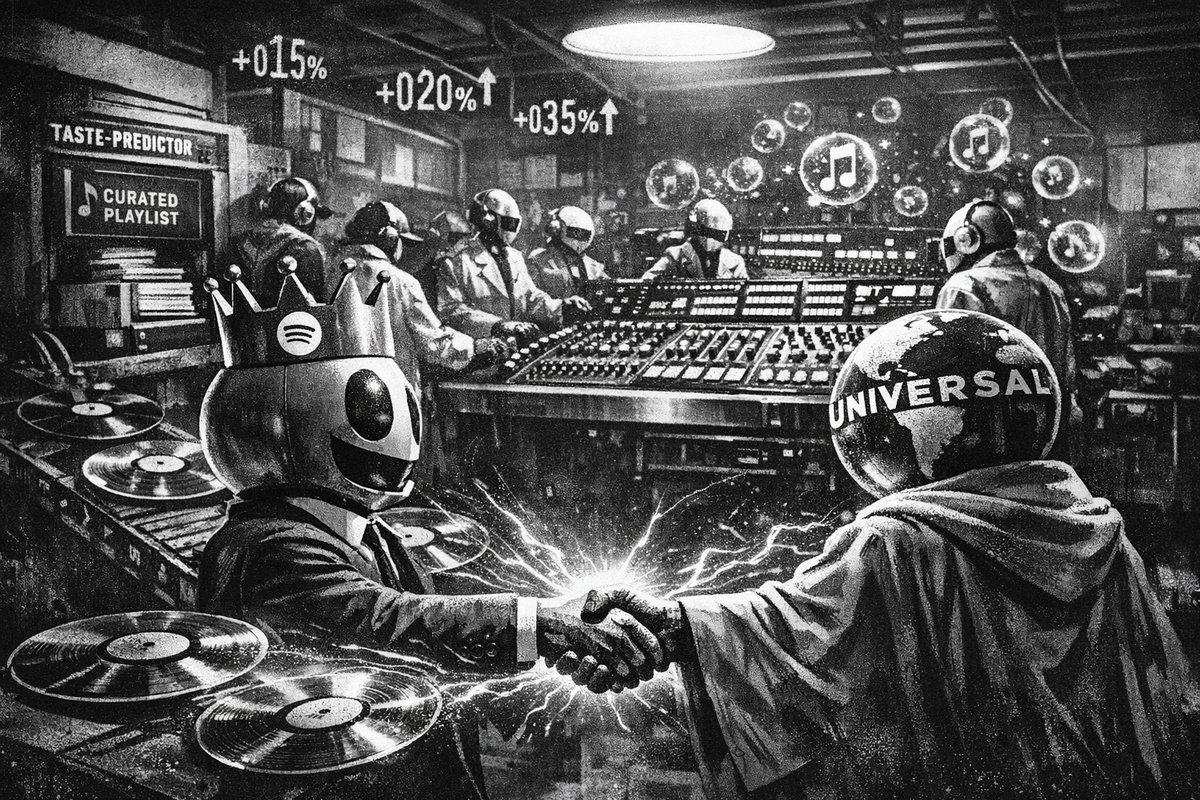
The Remix tool, developed with Universal Music Group, represents something unprecedented in digital music. Unlike the Wild West of unauthorized AI music generation we’ve seen flooding platforms, this creates a legitimate economic framework where derivative works actually compensate original artists.
Think of it as the difference between bootlegging and sampling in hip-hop. When producers started legally clearing samples in the 1990s, it didn’t kill creativity—it legitimized an entire genre while ensuring original artists got paid. Spotify’s Remix could do the same for AI-generated music.
Some users are already engaging with remix culture, though reactions vary:
“仮にAI曲であっても 自分の曲がパクられてたら気分はよくない さらに他人名義で配信されたら、自分が正当な権利者であってもCopyright Conflict(権利衝突)でブロックされてしまう” — @KOUKAdoggo
This concern about copyright conflicts highlights exactly why Spotify’s partnership approach with major labels is crucial—it provides a framework to prevent the chaos of unauthorized AI content.
The “Large Taste Model” Strategy
Spotify’s mention of a proprietary “large taste model” is where this gets technically fascinating. While OpenAI and Google battle over language models, Spotify is building something potentially more valuable: an AI that understands human musical preference at scale.
This isn’t just about creating music—it’s about creating music that people actually want to hear. The distinction matters enormously. Anyone can train an AI to compose melodies. Building one that understands why “Bohemian Rhapsody” works across generations while “Ice Ice Baby” was a cultural moment? That’s the Holy Grail.
The Marketplace Mathematics
Spotify’s marketplace business has grown fourfold since 2021—a detail that deserves more attention. This isn’t just about subscription revenue anymore. They’re building a platform where:
- Artists can sell directly to fans
- Podcast creators monetize premium content
- AI-generated content creates new revenue streams
- Live event tickets generate transaction fees
It mirrors Amazon’s evolution from bookstore to marketplace. The real money isn’t in selling products—it’s in taking a cut of every transaction on your platform.
The Historical Echo: When Edison Met the Musicians
This moment echoes Thomas Edison’s introduction of recorded music in the 1870s. Musicians initially feared recorded sound would destroy live performance. Instead, it created entirely new industries: record labels, radio, and eventually streaming.
AI-generated music faces similar resistance today. But Spotify’s approach—partnering with labels rather than disrupting them—suggests they’ve learned from history. The music industry’s greatest innovations succeeded when they expanded the pie rather than just redistributing existing slices.
What This Means for Everyone Else
Spotify’s moves put pressure on competitors to respond:
- Apple Music has deeper pockets but less AI expertise
- YouTube Music has Google’s AI resources but complex creator relationships
- Amazon Music has Alexa integration but limited creative tools
- Traditional labels must decide: partner with AI platforms or build competing tools
The winner won’t necessarily be the platform with the best AI—it’ll be whoever creates the most sustainable ecosystem for creators and listeners.
The Road to One Billion Users
Reaching one billion MAUs means Spotify needs to penetrate markets where music consumption patterns differ dramatically from Western norms. In markets like India and Southeast Asia, mobile-first consumption and local language content dominate.
Spotify’s AI tools could be particularly powerful here. A “large taste model” trained on global music preferences could help break down cultural barriers—imagine AI that can blend Bollywood rhythms with K-pop production techniques, creating fusion music that appeals across cultural boundaries.
The Skeptic’s View: What Could Go Wrong
Not everyone is convinced. The copyright concerns raised by users highlight real risks:
- Legal battles over AI-generated derivative works
- Artist backlash against automated creativity
- Technical limitations of current AI music generation
- Market saturation with low-quality AI content
The podcasting market offers a cautionary tale. Spotify invested billions in exclusive content, but podcast growth has slowed significantly. AI music tools could face similar adoption challenges.
The Bottom Line: Calculated Disruption
Spotify’s 2030 vision isn’t just about financial targets—it’s about positioning themselves as the platform where music’s AI-powered future unfolds. By partnering with major labels rather than fighting them, they’re building sustainable competitive advantages that pure-tech companies can’t easily replicate.
The UBS Buy rating and $735 price target suggest Wall Street believes this strategy will work. But the real test isn’t financial metrics—it’s whether Spotify can make AI-generated music feel as natural and enjoyable as discovering your next favorite song through their recommendation algorithm.
If they succeed, we’re looking at the birth of an entirely new creative medium. If they fail, it’ll be an expensive lesson in the limits of artificial creativity.
Published in Stream · Dispatch #386 · May 26, 2026 · 5 min read.
Reply to paolo@mont3.ch - every email gets a human answer within 24h.