Global corporations are executing a strategic shift that mirrors the manufacturing outsourcing wave of the 1980s and 90s, but this time it’s happening in the creative realm. Major companies are leveraging AI-powered development centers in India to bring advertising and marketing operations in-house, fundamentally changing how brands create, test, and deploy campaigns worldwide.
This transformation represents more than cost optimization—it’s a complete reimagining of the traditional advertising agency model that has dominated Madison Avenue for over a century.
The Historical Parallel: From Manufacturing to Creative Services
The current shift echoes the industrial outsourcing revolution that began in the 1970s. Just as companies like General Electric and IBM moved manufacturing to countries with lower labor costs and emerging technical capabilities, today’s corporations are relocating creative and marketing functions to India’s AI-enhanced talent pools.
But there’s a crucial difference: while manufacturing outsourcing was primarily about cost reduction, this new wave combines cost efficiency with technological superiority. Indian development hubs aren’t just cheaper—they’re often more advanced in AI implementation than their Western counterparts.
The numbers tell the story. Traditional advertising agencies charge $200-500 per hour for senior creative work, while AI-powered teams in Indian hubs can deliver comparable output at $30-80 per hour, often with faster turnaround times and greater iteration capacity.
AI-Driven Creative Production: Speed Meets Scale
The technical capabilities emerging from these hubs are reshaping what’s possible in advertising. Machine learning algorithms can now generate thousands of ad variations, test them across multiple demographics simultaneously, and optimize campaigns in real-time—all while human creatives focus on strategic direction and brand storytelling.
Real-world practitioners are documenting this transformation:
“I’m an AI content creator. I have a BSc in Mass Communication and I’m doing an MSc in PR & Advertising. I’m not one to brag about money because it requires consistency, hardwork, grace and smart work too, but here’s the truth: What AI content creation made me in one month is more than what my degrees made me in a whole year.” — @rirahcreates
This testimonial illustrates the economic disruption happening at the individual level. Creative professionals who master AI tools are achieving income levels that traditional advertising careers took years to reach.
The Technology Stack Transforming Creative Work
The AI tools powering these Indian hubs represent a convergence of multiple technologies:
- Natural Language Processing for automated copywriting and localization
- Computer Vision for dynamic visual content generation
- Predictive Analytics for campaign performance optimization
- Deep Learning for consumer behavior modeling
- Generative AI for rapid creative iteration
Creatives are already demonstrating the commercial viability of these tools:
“Created this cinematic MAGGI commercial entirely with AI 🍲 From the rich food textures and dramatic cooking shots to the emotional family moments and storytelling, every frame was crafted using AI-powered creativity.” — @estherannuduma
This represents a fundamental shift from AI as a supporting tool to AI as the primary creative engine.
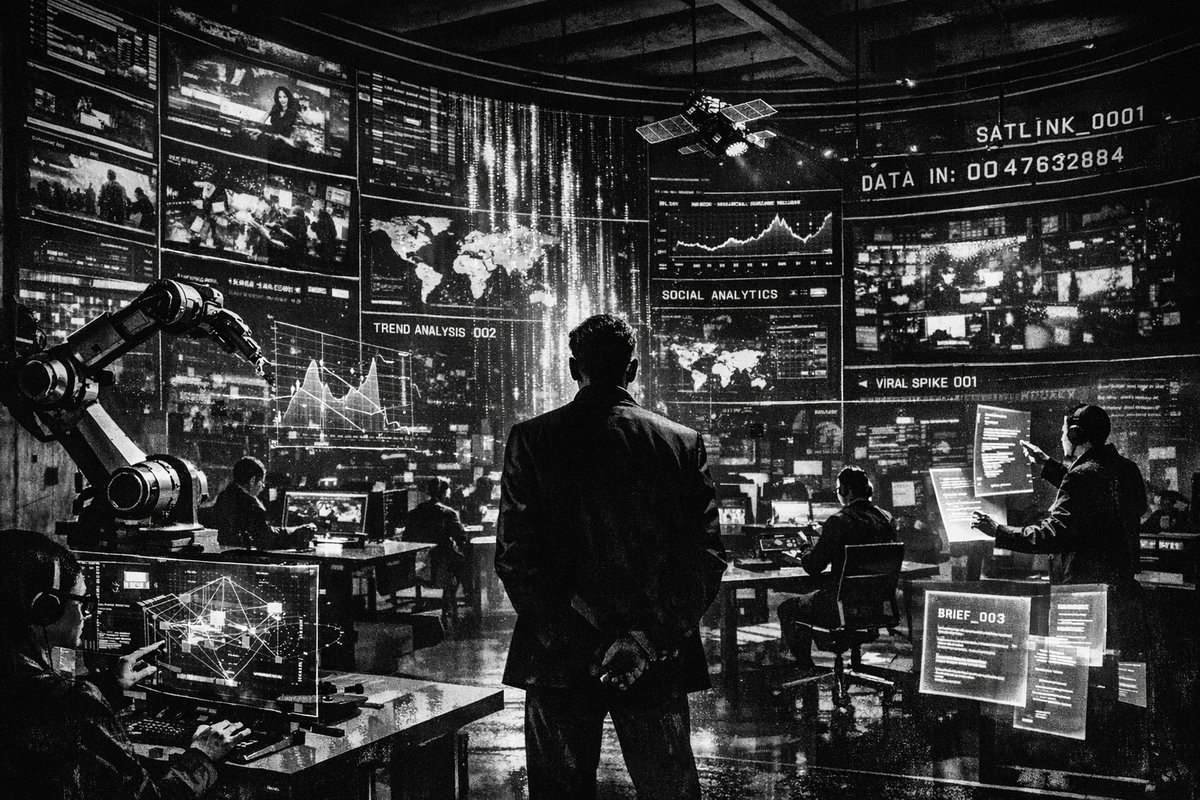
The Strategic Implications for Global Brands
Companies pursuing this strategy gain several competitive advantages:
- Cost Reduction: Operating expenses drop by 60-80% compared to traditional agency partnerships
- Speed to Market: Campaign development cycles compress from months to weeks
- Data Integration: In-house teams can access proprietary customer data that external agencies cannot
- Cultural Adaptation: AI tools excel at localizing content across multiple markets simultaneously
- Iteration Capacity: Brands can test hundreds of creative variations instead of the 3-5 concepts typical agencies provide
The control factor is equally important. Brands maintain complete ownership of their creative processes, intellectual property, and customer insights—assets they previously shared with external agencies.
The Agency Response: Adaptation or Obsolescence
Traditional advertising agencies face their most significant existential threat since the rise of digital marketing in the early 2000s. The agencies that survived the digital transition did so by acquiring new capabilities and talent. Today’s challenge is more fundamental: they must compete with AI-powered operations that can deliver comparable creative output at a fraction of the cost.
Some agencies are responding by developing their own AI capabilities and partnerships with Indian tech firms. Others are pivoting toward strategic consulting and high-level brand positioning work that requires deep industry expertise and client relationships.
However, many mid-tier agencies may face the same fate as manufacturing companies that couldn’t compete with overseas production: consolidation, acquisition, or closure.
The Broader Economic Impact
This shift represents a $50+ billion market transition. The global advertising industry generates approximately $600 billion annually, with creative services accounting for roughly 15-20% of that total. As corporations bring these functions in-house using AI-powered Indian hubs, they’re redistributing economic value from Western agencies to Indian technology centers.
The employment implications are significant but nuanced. While traditional agency jobs may decline in major advertising markets like New York, London, and Tokyo, high-skilled technical roles are expanding rapidly in Bangalore, Hyderabad, and Mumbai.
Looking Forward: The Next Phase
The current transformation is likely in its early stages. As AI capabilities continue advancing, we can expect even more sophisticated applications: real-time campaign optimization based on biometric feedback, personalized video content generated for individual consumers, and predictive creative development that anticipates market trends before they emerge.
Companies that successfully implement these AI-powered creative operations will gain sustained competitive advantages in customer engagement and market responsiveness. Those that cling to traditional agency models may find themselves at a permanent disadvantage in both cost structure and creative capability.
The advertising revolution happening in Indian AI hubs today will likely be remembered as the moment when creativity truly merged with technology, creating new possibilities that neither human creativity alone nor artificial intelligence alone could achieve.
This isn’t just about cost savings or efficiency gains—it’s about fundamentally expanding what’s possible in brand communication and customer engagement. The companies leading this transformation aren’t just changing how they create advertising; they’re redefining what advertising can be.
Published in Stream · Dispatch #395 · May 28, 2026 · 5 min read.
Reply to paolo@mont3.ch - every email gets a human answer within 24h.