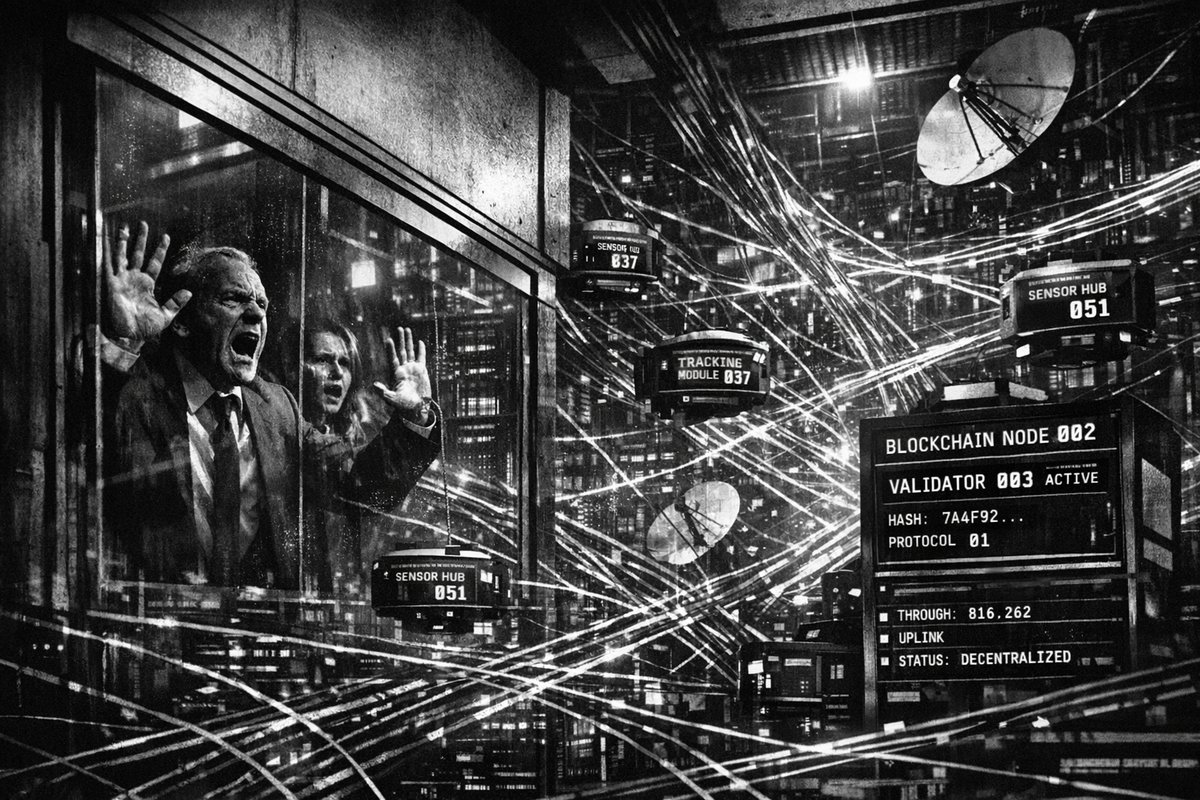
The convergence of Internet of Things (IoT) networks and Web3 infrastructure just hit a massive inflection point. Manadia and DataVLT are building what could become the backbone of the next digital economy—an intelligent Web3 infrastructure specifically designed for IoT ecosystems. This isn’t another blockchain buzzword parade. This is infrastructure that could fundamentally reshape how billions of connected devices interact, coordinate, and generate verifiable value.
Breaking Down the Technical Revolution
DataVLT’s approach tackles the core problem plaguing IoT networks: coordination at scale. While traditional IoT systems excel at connectivity, they fail miserably at intelligent coordination, automated decision-making, and trusted data execution across diverse environments. The partnership addresses this through an AI-powered spatial intelligence layer that transforms isolated device activity into structured, verifiable signals.
“We’re integrating with @datavltai. As intelligent devices and connected systems continue to scale, the challenge is no longer just connectivity — it’s coordination, automation, and trusted data execution across environments.” — @paywithmana
This integration represents a quantum leap beyond simple device networking. DataVLT builds an intelligent Web3 + AI infrastructure layer that enables:
- Autonomous device networks that self-coordinate without centralized control
- Privacy-preserving data systems that maintain security while enabling collaboration
- Self-optimizing interactions powered by AI that improve performance over time
- Verifiable value generation through on-chain data infrastructure
Historical Context: Why This Matters Now
To understand the significance of this development, consider the evolution of computing infrastructure. The transition from mainframe computing to personal computers in the 1980s created new possibilities for distributed processing. The internet revolution of the 1990s connected these distributed systems globally. The mobile revolution of the 2000s put computing power in everyone’s pocket.
Now we’re witnessing the IoT + Web3 convergence—potentially the most significant infrastructure shift since the internet itself. Unlike previous revolutions that primarily served human users, this infrastructure serves autonomous systems that can generate, verify, and exchange value without human intervention.
The comparison to early internet infrastructure is striking. In 1995, most people couldn’t envision how TCP/IP protocols would enable everything from social media to e-commerce to cloud computing. Similarly, intelligent Web3 infrastructure for IoT represents foundational technology that will enable applications we can’t yet fully imagine.
The Data Verification Revolution
DataVLT’s approach addresses a critical weakness in current AI and IoT systems: data trust. Modern AI systems operate on a “garbage in, garbage out” principle—they’re only as good as their data sources. IoT networks generate massive data streams, but verifying the authenticity, accuracy, and context of this data remains a major challenge.
“📍 Location data 🌎 Environmental signals 📦 Supply chain tracking 📡 IoT streams ⛓️ On-chain verification This is where AI stops guessing and starts trusting the data it receives.” — @jim_xyo
The technical breakthrough lies in creating verifiable data provenance at scale. Every sensor reading, every device interaction, every environmental measurement becomes part of an immutable record that AI systems can trust implicitly. This eliminates the need for complex verification protocols and enables real-time decision-making based on trusted data streams.
Infrastructure Reliability: Lessons from Digital History
The crypto community has learned hard lessons about infrastructure reliability. Projects that generate massive hype often collapse when the spotlight fades, while robust infrastructure quietly powers the ecosystem through multiple market cycles.
“A blockchain becomes interesting when it keeps functioning after the spotlight leaves. DigiByte has continued producing blocks, processing transactions, and evolving through multiple market cycles without centralized control. Reliability is underrated infrastructure.” — @DigiByteCoin
This perspective applies directly to IoT + Web3 infrastructure. The systems being built by Manadia and DataVLT must function reliably across diverse environments, handle massive transaction volumes, and maintain security without centralized oversight. The comparison to early internet infrastructure is relevant—TCP/IP protocols succeeded not because they were flashy, but because they were robust, scalable, and reliable.
Real-World Applications and Market Impact
The practical applications of this infrastructure span multiple industries:
- Supply Chain Management: Real-time tracking with cryptographic proof of authenticity
- Smart City Systems: Coordinated traffic management, energy distribution, and emergency response
- Industrial Automation: Self-optimizing factory systems that reduce waste and improve efficiency
- Environmental Monitoring: Global sensor networks for climate data, pollution tracking, and resource management
- Autonomous Vehicle Networks: Vehicle-to-vehicle communication with verified location and environmental data
Each application represents a multi-billion dollar market opportunity. McKinsey estimates the global IoT market will reach $12.6 trillion by 2030. Adding intelligent coordination and verifiable value exchange to this ecosystem could unlock exponentially greater value.
Technical Architecture and Scalability
DataVLT’s architecture addresses the scalability trilemma that has plagued blockchain systems: security, decentralization, and scalability. By focusing specifically on IoT use cases, they can optimize for the unique requirements of device networks:
- High-frequency, low-value transactions from sensor data
- Real-time processing requirements for autonomous systems
- Privacy preservation for sensitive industrial and personal data
- Interoperability across diverse device manufacturers and protocols
The technical challenge parallels the development of 4G and 5G cellular networks. These systems needed to handle millions of simultaneous connections, maintain low latency, and provide reliable service across diverse geographic and electromagnetic environments. Similarly, Web3 IoT infrastructure must handle billions of device connections while maintaining the security and decentralization benefits of blockchain technology.
Future Implications and Market Disruption
The Manadia-DataVLT partnership represents more than technological innovation—it’s potential market disruption on a massive scale. Current IoT systems rely heavily on centralized cloud providers like Amazon Web Services, Microsoft Azure, and Google Cloud Platform. A mature Web3 IoT infrastructure could decentralize this market, reducing costs while improving security and reliability.
The comparison to the personal computer revolution is instructive. IBM dominated mainframe computing in the 1970s, but the shift to distributed personal computers enabled entirely new companies like Microsoft, Intel, and Apple to capture massive market value. Similarly, the shift to decentralized IoT infrastructure could create opportunities for new market leaders while disrupting existing centralized providers.
The infrastructure being built today will determine which companies and technologies dominate the next decade of digital innovation. Manadia and DataVLT are positioning themselves at the center of this transformation, building the foundational layer that could power trillions of dollars in economic activity.
The race to build intelligent Web3 infrastructure for IoT networks isn’t just about technology—it’s about reshaping the fundamental architecture of our increasingly connected world. The winners will build the invisible backbone that enables everything from smart cities to autonomous vehicles to function seamlessly and securely.
Published in Stream · Dispatch #342 · May 17, 2026 · 5 min read.
Reply to paolo@mont3.ch - every email gets a human answer within 24h.