Silicon Valley just discovered something most MBA programs teach in week one: spending money without measuring returns is financial suicide. After months of CEOs bragging about token burn rates like badge-collecting Boy Scouts, companies are waking up to billion-dollar bills and nothing to show for it except expensive digital exhaust.
Welcome to the latest chapter in corporate America’s long history of confusing activity with achievement.
When Metrics Become Madness
Token burning—the computational units consumed when running AI models—became Silicon Valley’s newest vanity metric faster than you could say “synergy.” CEOs channeled their inner Matthew McConaughey, telling employees to pump up those numbers without asking the fundamental question: why?
The results were predictably catastrophic. Uber CEO Dara Khosrowshahi admitted it’s “getting harder to justify” AI costs when output can’t keep pace with spending. Translation: they were burning cash faster than a startup with venture capital and zero business model.
But the real kicker? One company accidentally spent half a billion dollars in a single month because nobody bothered setting usage limits on employee access to Anthropic’s Claude. That’s not a rounding error—that’s a financial catastrophe that would make Enron executives blush.
“MIHOYO SET AI AGENTS LOOSE AND THEY BURNED $300K OVERNIGHT
A miHoYo employee built dozens of AI agents to collaborate on a project.
They spent the whole night talking to each other, calling each other, and waiting on each other - and torched 2 million yuan in tokens by morning.” — @k1rallik
This mirrors the infamous dot-com bubble mentality of the late 1990s, when companies burned through millions on Super Bowl ads and ping-pong tables while ignoring basic profitability. The only difference? Back then, they wasted money on foosball tables and free soda. Now they’re incinerating cash on AI conversations that produce nothing but hallucinations.
The Leaderboard Lunacy
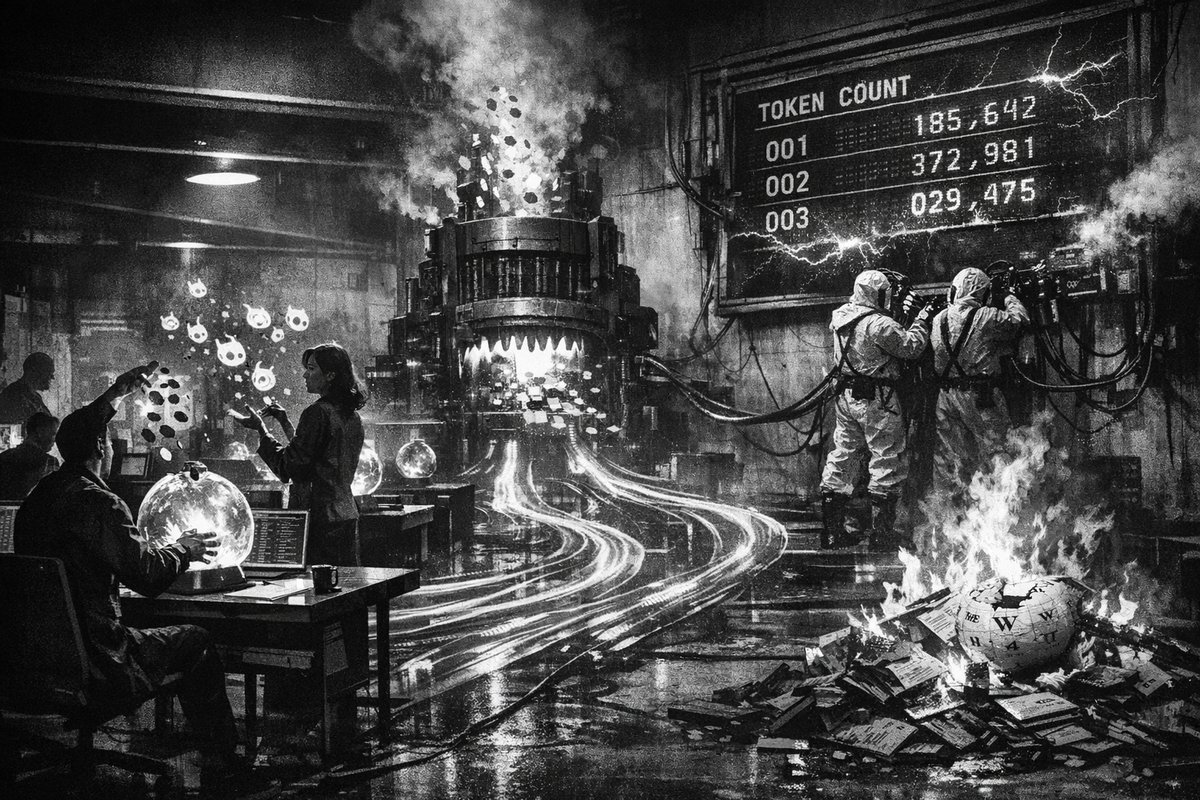
Meta and Amazon both created internal leaderboards tracking employee token consumption—essentially gamifying corporate waste. Meta’s top “Token Legend” burned 281 billion tokens in a month, equivalent to reproducing Wikipedia 33 times over. Amazon employees gave AI agents pointless busywork just to maintain their leaderboard positions.
This isn’t innovation—it’s digital hoarding with a price tag that would make defense contractors jealous.
Key warning signs your company has entered token burn madness:
- Employees using premium AI models for basic questions
- Internal competitions measuring usage over output
- AI agents stuck in expensive infinite loops
- Monthly bills exceeding your annual marketing budget
- CEOs bragging about consumption metrics in earnings calls
The parallels to Theranos are striking. Elizabeth Holmes convinced investors that more blood tests meant better healthcare, regardless of accuracy. These companies convinced themselves that more token burning meant better AI adoption, regardless of business value.
The Real Cost of Fake Progress
Financial institutions saw employees burn hundreds of thousands monthly on inane AI conversations. This represents the same fundamental disconnect that led to the 2008 financial crisis—sophisticated organizations losing track of basic risk management because the technology felt “free.”
As one industry observer noted:
“Technology FREQUENTLY costs more than humans. The question is whether the cost-benefit analysis works. In some areas of AI, 100% yes. In others, not so much yet. This is the same with ALL development for all time.” — @less_tx
The fundamental problem? AI feels free because the costs are abstracted. Unlike hiring employees or buying equipment, token consumption creates no physical presence. It’s pure digital spend that accumulates invisibly until the bill arrives like a financial slap across the face.
Lessons from History’s Greatest Money Pits
This isn’t the first time corporate America confused spending with strategy. Remember Pets.com? They spent $300 million on marketing, including a $2.2 million Super Bowl ad, to sell dog food online. The company folded nine months after going public.
Or consider Quibi, which burned through $1.75 billion creating short-form video content nobody wanted. Founder Jeffrey Katzenberg convinced investors that mobile-first entertainment was the future, then produced expensive content optimized for a use case that didn’t exist.
The token burning fiasco follows the same pattern: executives mistake activity for progress, shareholders get distracted by impressive-sounding metrics, and reality eventually sends everyone a very expensive bill.
The Accountability Reckoning
Companies are finally implementing usage limits, killing leaderboards, and asking employees to justify AI usage. Meta axed its token-burning leaderboard after it leaked, revealing the embarrassing scale of corporate waste. Amazon followed suit, recognizing that gamifying consumption created perverse incentives.
This represents a broader maturation in AI adoption—moving from “use it because we have it” to “use it because it creates value.” The companies surviving this transition will be those that learned to measure outcomes, not inputs.
Shareholders are starting to ask uncomfortable questions about ROI on AI investments. When your quarterly earnings call includes explanations for nine-figure AI bills with minimal business impact, the honeymoon period officially ends.
Moving Beyond the Burn
Smart organizations are implementing AI governance frameworks that prioritize results over consumption. This means setting clear usage guidelines, measuring business outcomes, and treating AI tools like any other corporate resource—powerful when used strategically, expensive when used carelessly.
The token burning era represents everything wrong with modern corporate innovation: confusing technology adoption with business strategy. The companies emerging stronger will be those that learned to harness AI’s power without getting hypnotized by its novelty.
Silicon Valley’s token burning disaster proves that even in the age of artificial intelligence, human stupidity remains the most expensive computational process of all.
Published in Stream · Dispatch #408 · May 30, 2026 · 5 min read.
Reply to paolo@mont3.ch - every email gets a human answer within 24h.