The tech industry has officially lost its mind. UK companies are performing what PR executives call “yoga-level stretches” to rebrand themselves as AI specialists, desperately chasing the artificial intelligence hype train even when their connection to actual AI is more tenuous than a dial-up internet connection. Welcome to the era of AI washing – where every mundane piece of automation suddenly becomes “AI-powered” and every CEO transforms into a self-proclaimed AI visionary overnight.
The Great AI Rebrand Circus
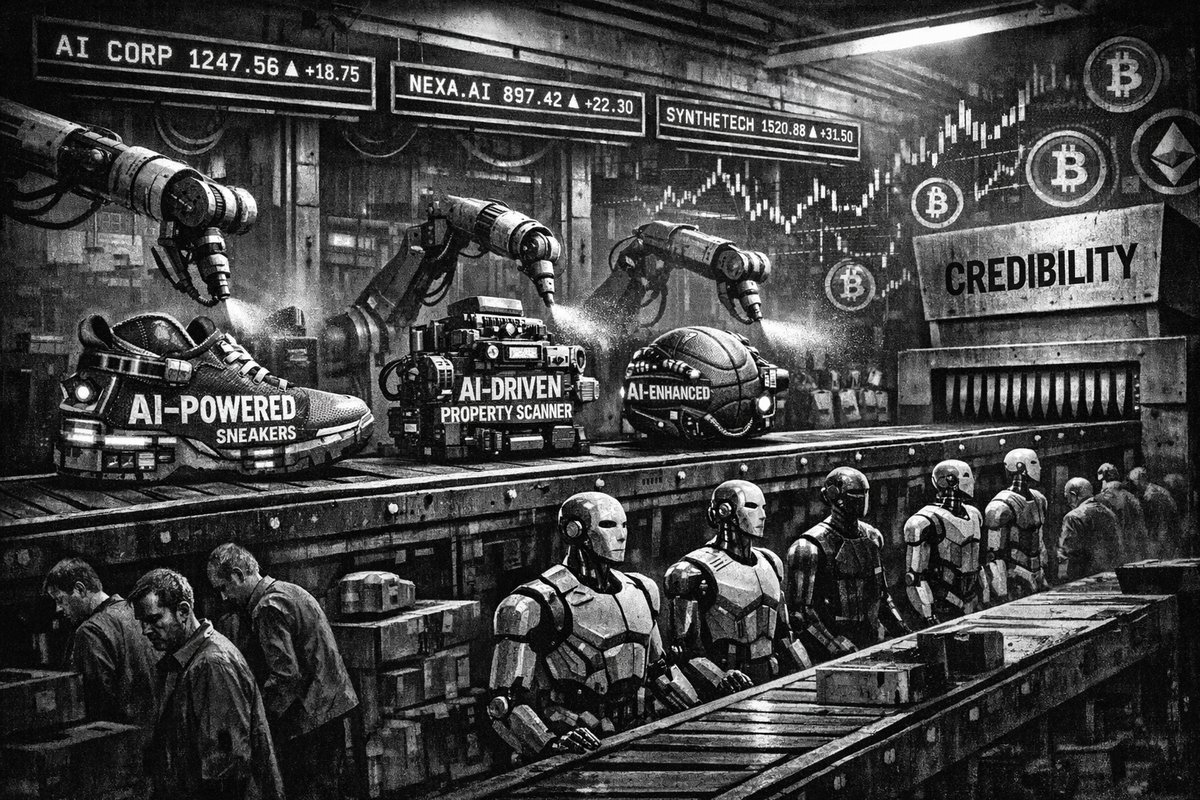
Communications executives across London are reporting a disturbing trend: bosses in decidedly low-tech industries demanding to be pitched to journalists as artificial intelligence companies. The desperation is palpable, and the results are often laughable. We’re witnessing AllBirds, a shoe company, suddenly “pivoting” to acquiring AI graphics processing units. We’re seeing press releases about “AI-powered basketball hoops” and “AI-powered lasers” that supposedly protect women from predators on subway platforms.
This isn’t innovation – it’s desperation dressed up in buzzwords.
As one south London publicist bluntly stated: “You can almost hear the eyes roll when you mention the word AI to a reporter. I’ve watched a steady stream of companies try to bolt the label AI on to whatever they do, no matter how tenuous the link.”
Historical Context: We’ve Been Here Before
This AI washing phenomenon isn’t unprecedented – it’s following a predictable pattern that tech history has seen multiple times. Remember the dot-com bubble of the late 1990s? Companies were frantically adding “.com” to their names and claiming internet relevance regardless of their actual digital capabilities. Boston Chicken became Boston Market.com, and hundreds of traditional businesses suddenly discovered they were “internet companies.”
The similarities are striking:
- Superficial rebranding without fundamental business model changes
- Investor pressure driving irrational market positioning
- Media fatigue developing as journalists become skeptical of inflated claims
- Market saturation of companies claiming the same revolutionary breakthrough
Just as the dot-com crash exposed companies with no real internet strategy, the current AI washing epidemic will inevitably separate genuine AI innovators from companies running basic automation scripts.
The Automation vs. AI Confusion
Here’s the brutal truth: most of what companies are calling “AI” is just improved automation. The disconnect is staggering. One PR account director described a property company marketing a handheld building scanner that generates floor plans as “AI-powered.” His assessment? “It’s just a handheld scanner. There’s probably elements of AI in it that sort of speed the process up… but it’s actually just automation.“
This confusion between automation and artificial intelligence reveals a fundamental misunderstanding of what AI actually represents. Traditional automation follows predetermined rules and workflows. Actual AI involves machine learning, pattern recognition, and adaptive decision-making capabilities that improve over time.
The key differences:
- Automation: Rule-based, predictable, follows programmed instructions
- AI: Learning-based, adaptive, makes decisions from data patterns
- Machine Learning: Improves performance through experience and data
- Generative AI: Creates new content, solutions, or responses
The PR Industry’s Ethical Crisis
Technology PR professionals find themselves in an uncomfortable position, forced to send out AI-related press releases “under duress” despite knowing the claims are exaggerated. One central London account director admitted: “About 50% of the stories I send out, I don’t want to send out.”
This represents a fundamental breakdown in the relationship between authentic innovation and marketing hype.
Imran Ariff, a media strategist for Fight or Flight, a London-based communications agency, captured the problem perfectly: “It can be easy for brands to ‘drink their own Kool-Aid’ when they’re so proud of what they’re doing and consequently, go too far in their efforts to promote their AI capabilities.”
“$SOFI should start talking about how AI will enable it to revolutionize finance and disintermediate legacy finance and banking. No AI washing. A real, measurable application of the technology. That will get the attention of the market.” — @danielnewmanUV
This tweet highlights exactly what genuine AI integration should look like – specific, measurable applications rather than vague “AI-powered” marketing speak.
The Human Cost of AI Hype
While companies scramble to rebrand themselves as AI innovators, the human impact remains stark. Standard Chartered’s CEO recently apologized after describing workers facing AI-related job losses as “lower-value human capital” – a phrase that reveals the callous calculation behind many AI adoption strategies.
This isn’t just about marketing deception – it’s about real people losing jobs to technologies that may not even qualify as genuine AI.
Market Reality Check
Despite the AI washing epidemic, stock market investors have largely ignored recent jitters over the AI boom. However, this market resilience may be masking fundamental problems with how AI capabilities are being evaluated and priced.
The crypto and trading communities are also jumping on the AI bandwagon, as evidenced by social media discussions about AI-powered trading terminals and market analysis tools. While some of these applications may represent genuine innovation, others appear to be traditional algorithmic trading rebranded with AI terminology.
The Path Forward: Authentic AI vs. Marketing Fiction
The solution isn’t to abandon AI development – it’s to demand honesty about what constitutes real artificial intelligence versus enhanced automation. Companies genuinely integrating AI technologies should be able to demonstrate:
- Measurable learning capabilities that improve over time
- Adaptive decision-making that goes beyond programmed responses
- Data-driven insights that weren’t previously possible with traditional methods
- Transparent explanations of how their AI systems actually work
The AI revolution is real, but it’s being obscured by a fog of marketing manipulation and corporate desperation.
Conclusion: Separating Signal from Noise
AI washing represents more than just aggressive marketing – it’s a symptom of an industry struggling to understand and honestly communicate about transformative technology. The companies engaging in these “Bikram yoga-level stretches” to manufacture AI relevance are ultimately undermining public trust in genuine AI innovation.
The winners in the real AI revolution won’t be the companies shouting loudest about their AI capabilities – they’ll be the ones quietly building systems that actually learn, adapt, and solve problems in ways that weren’t possible before.
As journalists become increasingly skeptical and consumers more educated about AI capabilities, the AI washing bubble will inevitably burst. When it does, we’ll finally see which companies were building the future and which were just rebranding the past with fancier terminology.
Published in Stream · Dispatch #375 · May 24, 2026 · 5 min read.
Reply to paolo@mont3.ch - every email gets a human answer within 24h.