The financial markets have witnessed a seismic shift that makes the industrial revolution look gradual by comparison. AI-driven systems now control 88% of all crypto trading volume, marking the end of an era where human intuition and retail participation mattered. This isn’t just evolution—it’s algorithmic domination on a scale that reshapes everything we thought we knew about market dynamics.
The Speed of Extinction: Three Years vs. Fifteen
While traditional equity markets took 15 years to transition from human-dominated to algorithm-dominated trading, cryptocurrency markets achieved the same transformation in just 3 years. This acceleration represents the fastest fundamental market structure change in financial history, surpassing even the introduction of electronic trading in the 1980s.
The numbers paint a stark picture of this transformation:
- $20.57 trillion in global crypto trading volume in Q1 2026
- Retail investors account for only $979 billion (less than 5%)
- 92% of Bitcoin volume occurs in derivatives markets built for algorithmic execution
- The crypto trading bot market alone is valued at $47.43 billion
“THE RETAIL CRYPTO TRADER IS OFFICIALLY EXTINCT. As of May 2026, AI-driven systems and autonomous agents now account for up to 88% of all crypto trading volume.” — @cryptogoos
This data confirms what many suspected but few wanted to acknowledge: retail traders are no longer participants—they’re products being consumed by algorithmic efficiency.
The New Market Reality: Machines Trading with Machines
Today’s market movements bear little resemblance to the human-driven sentiment cycles of the past. When Bitcoin declined from $82,000 to $79,000 recently, this wasn’t panic selling or profit-taking by worried investors. It was a machine-executed positioning cycle, where algorithms adjusted their exposure based on predetermined risk parameters and correlation models.
The contrast in performance metrics reveals the brutal reality:
- Institutional success rate in active crypto trading: 82%
- Retail success rate: 14%
- This gap widens annually as algorithmic participation increases
These aren’t just numbers—they represent the systematic extraction of wealth from individual traders who continue applying frameworks built for a market that no longer exists.
The Systemic Risk Nobody’s Discussing
The Financial Stability Board (FSB) issued a direct warning in October 2025 about AI model homogenization building systemic herding risk comparable to the 2008 financial crisis. This parallel isn’t hyperbolic—it’s mathematical.
When major banks in 2008 used similar risk models and capital adequacy frameworks, they executed identical decisions during market stress, amplifying the crisis. Today’s situation is potentially worse because:
- Thousands of algorithmic systems train on identical datasets
- They monitor the same macro signals
- They run similar strategy architectures
- They execute identical exit decisions under stress
The October 2025 flash crash demonstrated this risk in real-time, liquidating $19.3 billion in a single day, with $3.21 billion wiped in 60 seconds. Order book depth collapsed 98% from $103 million to $170,000 in minutes.
“AI agents, stablecoins, and programmable payments dominated fintech this week: @Fiserv launched an AI operating system for banks with @OpenAI and @awscloud… The shift from fintech tools to autonomous financial infrastructure is accelerating fast.” — @twifintech
Historical Parallels: When Machines Took Over Before
This isn’t the first time technology has fundamentally altered market structure. The introduction of program trading in the 1980s contributed to Black Monday 1987, when the Dow Jones dropped 22.6% in a single day. However, that event involved relatively simple computer programs executing predetermined strategies.
Today’s AI systems are exponentially more sophisticated, capable of:
- Real-time sentiment analysis across multiple data streams
- Dynamic strategy adaptation based on market conditions
- Cross-asset correlation modeling that spans global markets
- Microsecond execution that makes human reaction times irrelevant
The difference between 1987’s program trading and 2026’s AI dominance is like comparing a calculator to a quantum computer.
The Infrastructure Supporting Machine Supremacy
Crypto’s 24/7 operation, lack of circuit breakers, absence of trading halts, and minimal coordinated regulatory oversight create the perfect environment for algorithmic dominance. Unlike traditional markets with built-in friction designed to slow down automated trading, crypto markets offer unlimited velocity.
“Bond market screaming bloody murder while stocks were still partying like it’s 2021. ‘Dear God’ is right — this is the number that breaks mortgages, corporate debt, housing, and leveraged everything in one shot.” — @Ashkashhhhhh
The crypto trading bot market’s projected growth to $200 billion by 2035 indicates this trend will accelerate, not stabilize. Every dollar invested in algorithmic infrastructure makes human competition increasingly futile.
What This Means for Financial Markets
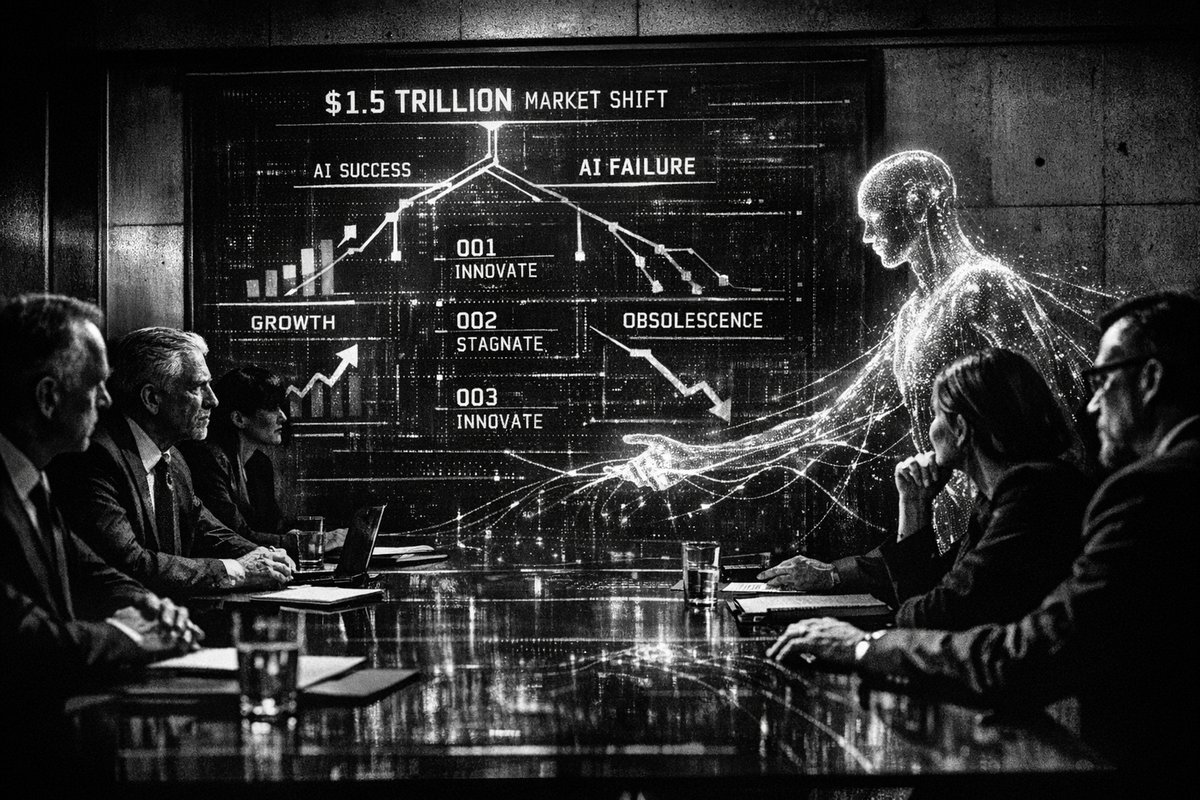
The implications extend far beyond crypto. As AI systems prove their superiority in unregulated markets, traditional finance will inevitably follow. The $1.5 trillion AI disruption referenced in financial analyses represents just the beginning of a fundamental restructuring where:
- Market efficiency reaches theoretical maximums
- Price discovery becomes purely algorithmic
- Human intuition and emotion become market inefficiencies to be exploited
- Retail participation transforms from trading to passive investment
We’re witnessing the birth of markets designed by machines, for machines, where human participation becomes increasingly irrelevant.
The question isn’t whether AI will dominate all financial markets—it’s how quickly this transition will occur and whether regulatory frameworks can adapt fast enough to prevent systemic instability. Based on crypto’s three-year transformation timeline, traditional finance may have less time to prepare than anyone realizes.
The age of algorithmic supremacy has arrived, and the machines aren’t just winning—they’ve already won.
Published in Stream · Dispatch #334 · May 15, 2026 · 5 min read.
Reply to paolo@mont3.ch - every email gets a human answer within 24h.