Como Lake Cable is a cable wakeboard park in Colico, on Lake Como. It has wakeboarding, an aquapark and a chill area, open from February to November.
Until September 2026 the park ran on two systems: a WordPress site for the public pages, and an outside membership service for cards, purchases and bookings.
We replaced both with one platform. It went live on 18 September 2026, two months after the first line of code, with the old system's customers, cards and prepaid time carried over.
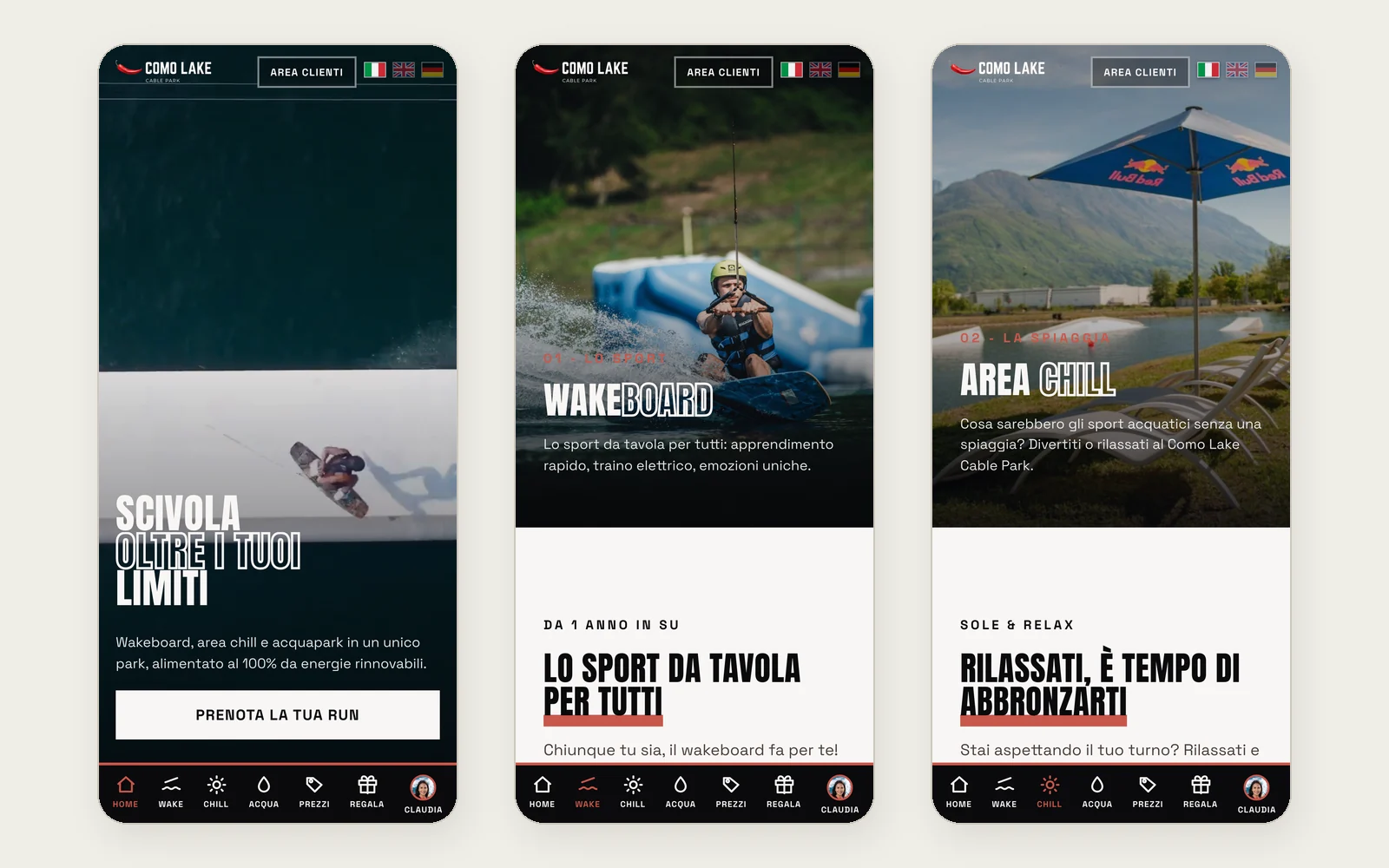
What made it hard
- The park could not stop. The switch happened in September, with the cable running every day. Nobody could lose a card or a run on the way over.
- Two systems held one set of people. Customers, members, cards and prepaid time had to arrive in the new platform whole, and match.
- One rule had to hold everywhere. Without a valid card, nobody can book or buy. The website and the desk had to apply it the same way.
- Three kinds of user. Riders, the desk and the office each need their own view of the same day.
- Visitors' questions. Opening hours, how the cable works, whether a slot is free on Saturday. The site had to answer them itself, in the visitor's language.
What shipped
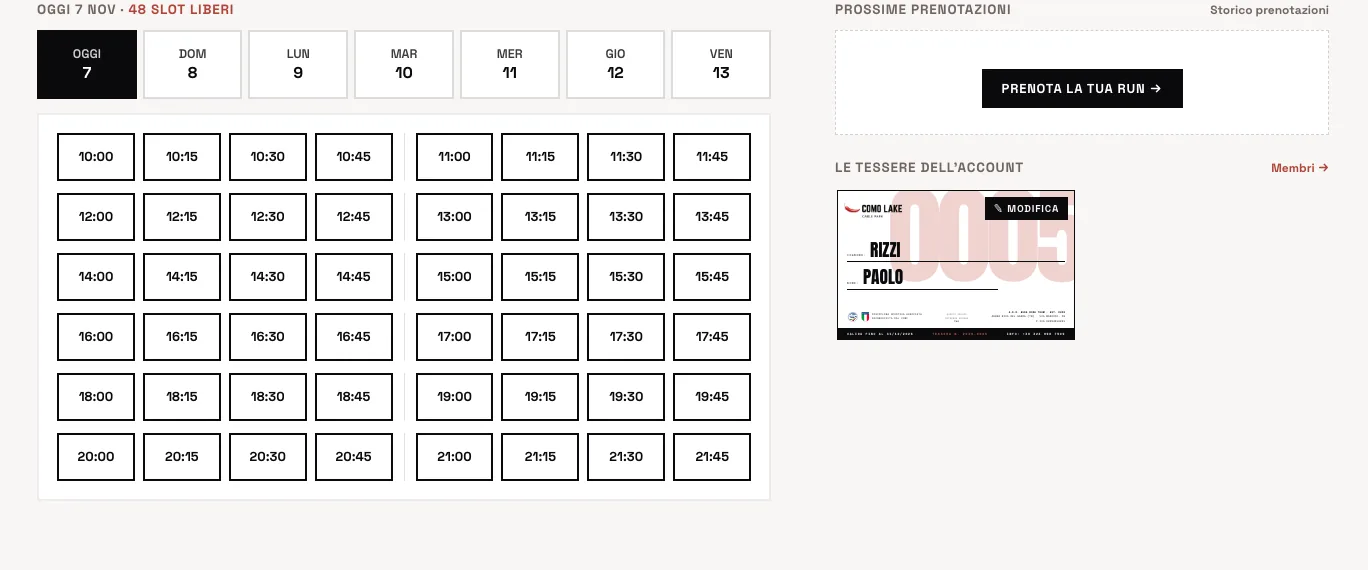
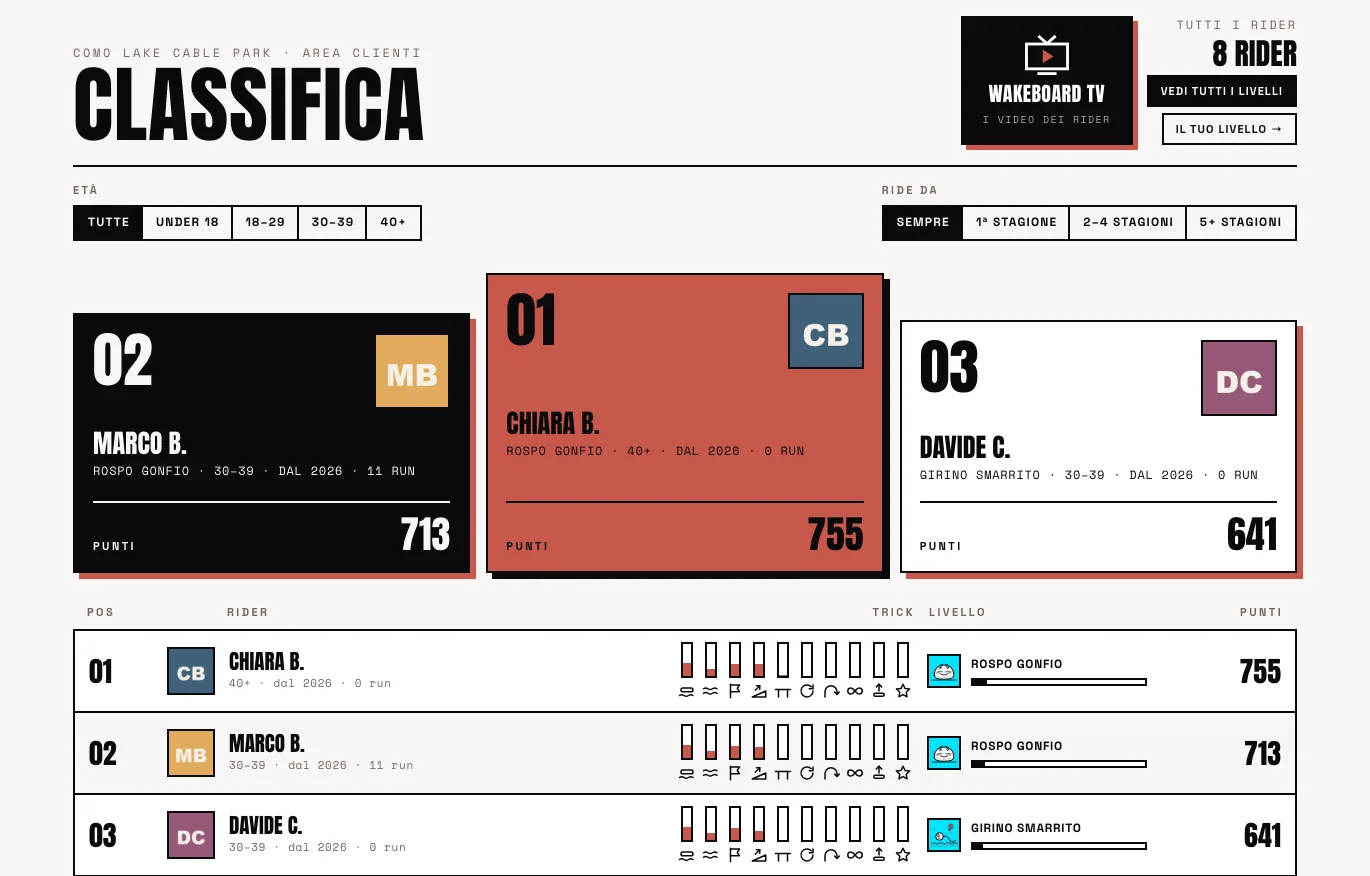
- A customer area. Book a run for anyone on the account, buy credit, see the season card, and the rider's level and place in the ranking.
- A desk console. Find a customer, register a walk-in, book on their behalf. Every action is traced.
- An office. The catalogue, the cards, the operators, gift cards, a receipt for every purchase, and the day and the week at a glance.
- Claudia, the assistant. She answers on the public pages, in the visitor's language.
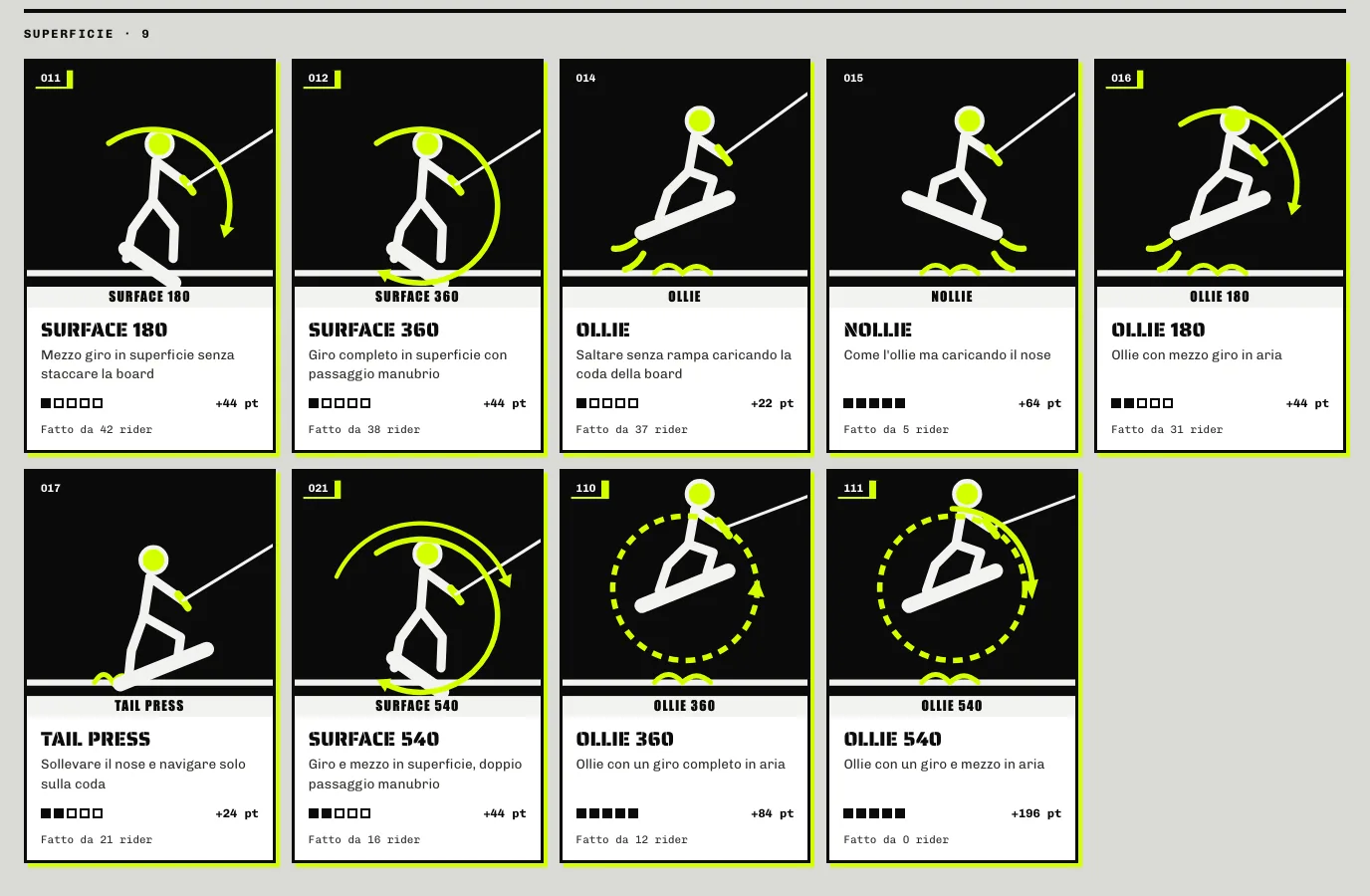
- A league. Riders film their tricks, the park approves them, and the points move them up a ranking.
The screens below, apart from the public site and the league's trick list, come from the demo park. The riders in them are sample accounts, not real customers.
How it works
One rule, written once. Buying and booking need an active card. The one exception is buying or renewing the card itself. The rule lives in one function, and the website, the desk and the office all call it.
Claudia reads the live site. With every question she receives three things, fetched fresh: the park's pages as a visitor sees them, the rules of the booking system, and the free slots for the week ahead. When a page changes, her answers change with it.
Each park keeps its own riders. Each park runs its own install and keeps its customers in its own database. It publishes one feed of its ranking, and wakeleague.it reads every park's feed and ranks the riders together. The feed carries no surnames, contacts or birth dates.
How we built it
- 18 July 2026. First commit, from the design of the old site and the park's way of working.
- Accounts first. Customers, members and cards, with the old system's book imported and checked.
- Then sales. Credit, products and receipts, with real payments on Stripe's own page.
- Then booking. The quarter hours, for riders and for the desk.
- 18 September. Live. Payments, the wallet and the park's own email followed the next day.
- Since then. Updates through the season: the league and Claudia's second version. A restaurant and a shop are built and not yet open.
Result
- One platform in place of two: the public site, the customer area, the desk and the office share the same customers, cards and credit.
- 50 riders are in the Wake League ranking today, every trick in it approved on video.
- The platform is now Wake League: any cable park can run the same software, in its own install.
Stack
- Backend. Python 3.13, Django 6, PostgreSQL 16.
- Frontend. Pages rendered on the server, plain JavaScript. No build step.
- Payments. Stripe Checkout, for credit top-ups.
- Receipts. PDFs generated on the server for every purchase.
- Assistant. Claude, by Anthropic, given fresh context with every question.
- Media. Trick videos trimmed with ffmpeg; photos from any phone, iPhone formats included.
- Hosting. Docker Compose, one install per park.
Article 033 · 7 November 2026 · 5 min read.
Reply to paolo@mont3.ch.