Manufacturing faces an unprecedented crisis. Over 25% of the manufacturing workforce is aged 55 or older, and they’re walking out the door with decades of irreplaceable operational knowledge. Unlike the skilled craftsmen of medieval guilds who formally passed down techniques through apprenticeships, modern factories have no systematic way to capture what their experts actually know. The consequence? New hires follow formal procedures that omit the informal knowledge that drives real performance.
This isn’t just a staffing problem—it’s an existential threat to operational excellence. Research from the National Institute of Standards and Technology shows that process variability directly increases defect rates and rework costs. When that variability stems from knowledge gaps rather than equipment issues, the damage compounds exponentially.
The Hidden Economics of Lost Expertise
The numbers reveal the magnitude of this crisis. A survey of 1,000 organizations found that 92% do not consistently capture knowledge from soon-to-be retirees, even though 58% of C-suite leaders describe this risk as very serious. This disconnect between awareness and action mirrors the dot-com era when companies knew the internet would disrupt their industries but failed to act decisively.
The performance gap between experienced and new operators tells the real story. Some senior workers produce double the output per shift compared to newer employees, with virtually no scrap and higher throughput. This isn’t about work ethic or natural talent—it’s about accumulated, undocumented expertise that took decades to develop.
“Most CRE firms trying to build AI in-house are building the layer that is about to be commoditized. What they’re skipping is the layer nobody can sell them, the data model their own analysts already run on inside their heads. Your firm’s tribal knowledge is your moat.” — @lucashd
Generative AI: The Knowledge Conversion Engine
The breakthrough lies in generative AI’s ability to convert tribal knowledge into structured digital assets at unprecedented speed and scale. The traditional approach—having experts write documentation—creates an impossible bottleneck. Writing comprehensive work instructions takes weeks; reviewing AI-generated ones takes hours.
The process architecture is deceptively simple:
- Capture video of experienced operators performing critical tasks
- Feed footage into AI engines that automatically generate step-by-step instructions
- Extract safety checkpoints, proof points, and validation gates
- Route to expert review for validation and approval
- Deploy standardized guidance across shifts and sites
This mirrors how the printing press revolutionized knowledge preservation in the 15th century, except the timeline has compressed from decades to days.
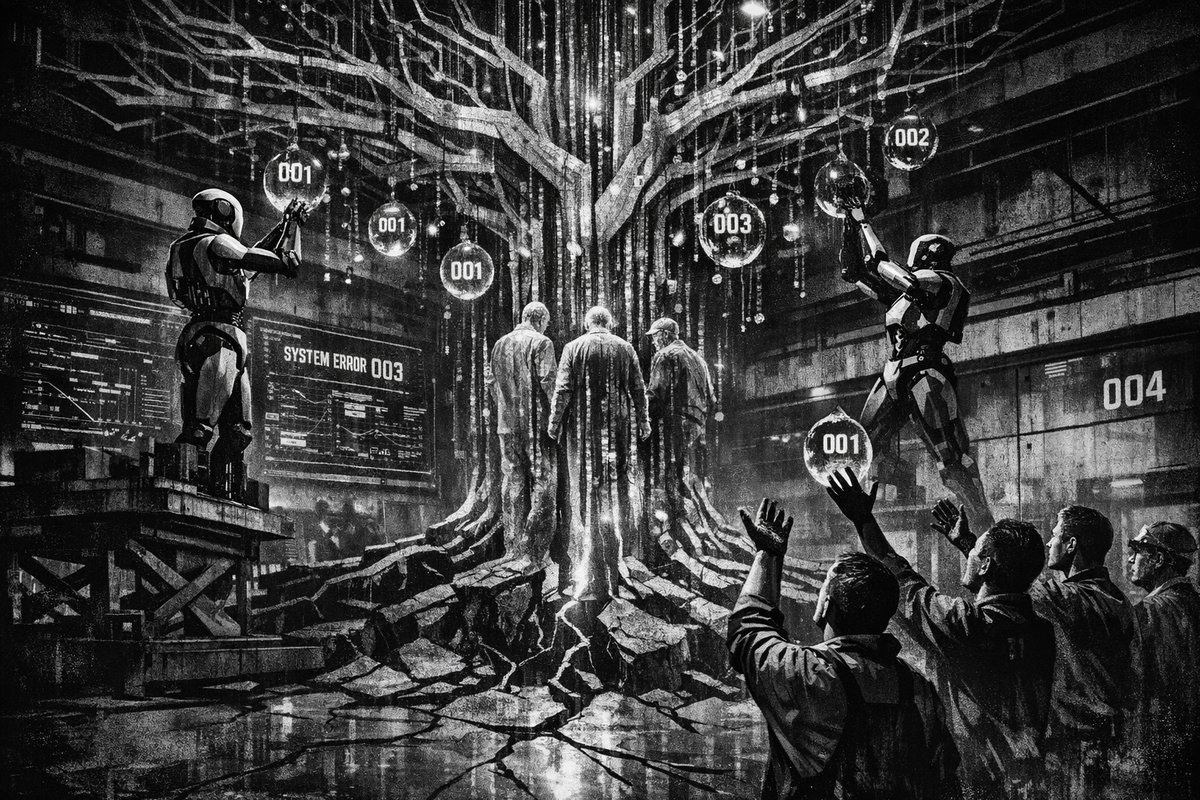
The Memory Problem: Why Enterprise AI Fails
Most manufacturing AI deployments miss the critical component: organizational memory. Systems can execute tasks but immediately forget the context, decisions, and reasoning behind those actions. Every handover requires rebuilding knowledge from scratch.
“I’ve spent years deploying enterprise AI systems. The biggest issue wasn’t the models — it was this: Every time responsibility for an agent moved to a new person, we started from zero. Same questions, same edge cases, same tribal knowledge — all lost. We weren’t building systems. We were building forgetful temporary workers.” — @MindfulReturn
This insight exposes why many AI implementations plateau. Without persistent memory, organizations lose an estimated 30% of team capacity to constant re-teaching and knowledge reconstruction.
The Three-Layer Architecture for Knowledge Persistence
Successful knowledge capture requires a structural approach that mirrors how human organizations actually function:
- Role Agents: Handle specific jobs with clear permissions and boundaries
- Coordination Layer: Manages workflows, task routing, and escalation points
- Governance Framework: Controls access, budgets, security, and audit trails
- Memory System: Captures real work as it happens and builds institutional knowledge
The human validation gate remains non-negotiable. In regulated manufacturing environments where errors can injure workers or compromise products, no AI-generated content reaches the production floor without expert sign-off. This isn’t a bottleneck to eliminate—it’s the control mechanism that makes AI-assisted documentation safe to deploy.
Racing Against the Retirement Clock
The urgency cannot be overstated. Unlike previous technological transitions that unfolded over decades, the manufacturing knowledge crisis operates on the timeline of human mortality. Every month of delay means more expertise walking out the door permanently.
This parallels the situation facing NASA in the 1990s when Apollo-era engineers began retiring. The agency launched aggressive knowledge capture programs, conducting thousands of hours of recorded interviews and creating detailed technical histories. Manufacturing needs a similar mobilization—but with AI acceleration.
The organizations that act decisively will build compounding knowledge advantages. Those that wait will find themselves managing facilities where institutional memory exists only in scattered files and the fading recollections of contractors brought back to fix problems no one else understands.
The choice is binary: capture tribal knowledge systematically now, or lose it systematically forever. There is no third option.
Published in Stream · Dispatch #355 · May 20, 2026 · 4 min read.
Reply to paolo@mont3.ch - every email gets a human answer within 24h.