We’re witnessing the birth of an entirely new digital economy. Zetrix AI and China Academy of Information and Communications Technology (CAICT) just unveiled Avatar, a blockchain-powered trust protocol that transforms AI agents from simple chatbots into autonomous economic actors. This isn’t incremental progress—it’s infrastructural disruption that could reshape how humans, companies, and machines interact in the digital realm.
Beyond Chatbots: The Rise of Agentic AI
The AI revolution has stalled at the chatbot level for too long. Current AI assistants can answer questions and generate content, but they can’t act with authority, transact with confidence, or represent users in meaningful economic exchanges. Avatar shatters this limitation by creating what the developers call an “agentic economy”—a system where AI agents possess verified identities, digital credentials, and asset access.
This shift parallels the evolution from static HTML pages to dynamic web applications in the early 2000s. Just as Web 2.0 enabled user-generated content and social interaction, the agentic economy enables machine-generated value and autonomous representation. The difference? This transformation operates at machine speed, not human speed.
“Zetrix AI and CAICT unveiled Avatar, a blockchain-based trust protocol designed as the critical infrastructure for the emerging agentic economy. This platform empowers autonomous AI agents to act, transact, and communicate with verified identity and access to digital assets.” — @zetrix_official
Blockchain as the Trust Backbone
Avatar addresses the fundamental problem plaguing AI deployment: trust. Without verification mechanisms, how do you know an AI agent truly represents who it claims? How can businesses engage with autonomous systems without fraud risk? How do you prevent AI impersonation at scale?
The platform’s hybrid OpenClaw and pipeline framework, integrated with Zetrix and Astron blockchains, creates an immutable trust layer. Every agent interaction, credential verification, and asset transaction becomes cryptographically provable. This isn’t just about security—it’s about enabling commerce between entities that have never met and may never meet.
Historically, trust systems evolved alongside economic complexity. Medieval merchant guilds created reputation networks. The Medici Bank pioneered double-entry bookkeeping in the 15th century. SWIFT enabled global financial messaging in the 1970s. Avatar represents the next evolution: cryptographic trust for autonomous agents.
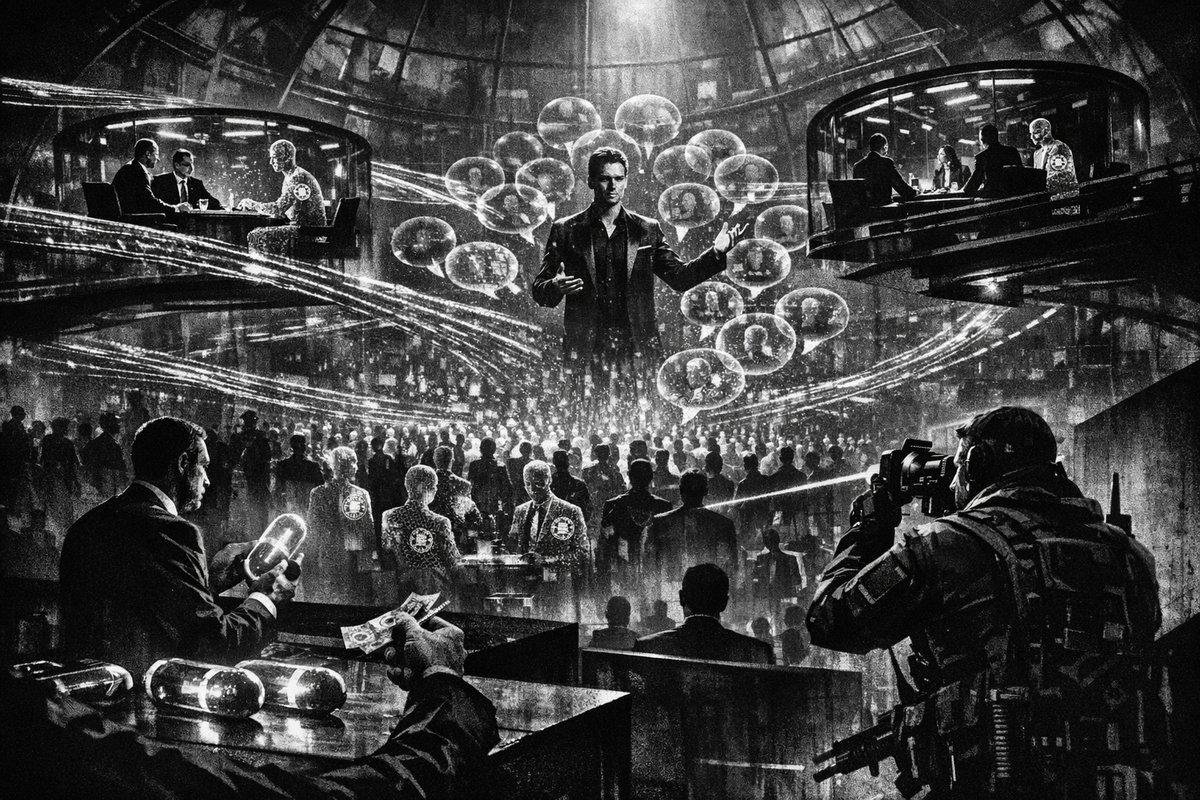
Five Modes of Agentic Transformation
The Avatar platform targets five distinct interaction models, each representing a fundamental shift in how humans and organizations operate:
- Executive and Professional Avatars: AI representations that preserve institutional knowledge, onboard employees, and provide strategic guidance beyond human availability constraints
- Celebrity and Public Figure Agents: Scalable fan engagement systems enabling thousands of simultaneous personalized interactions without physical presence requirements
- Creator and Influencer Extensions: AI-native monetization engines that package expertise, manage paid communities, and extend commercial reach beyond human bandwidth limitations
- Corporate Autonomous Agents: Dynamic business representatives that actively prospect, customize messaging, and engage in continuous outreach, replacing static websites with intelligent brand ambassadors
- Personal Intelligence Amplifiers: Enhanced versions of individuals trained on personal knowledge and preferences, potentially evolving into verifiable digital legacies for future generations
Agent-to-Agent Economy: The Real Revolution
The most transformative element isn’t human-to-agent interaction—it’s Agent-to-Agent (A2A) commerce. Imagine your personal AI negotiating directly with a company’s AI agent, settling transactions, exchanging information, and coordinating activities without human intervention. The blockchain serves as the settlement layer, ensuring every interaction is verifiable, every agreement is enforceable, and every transaction is immutable.
This resembles the emergence of high-frequency trading in financial markets, but applied to everyday commerce. Just as algorithmic trading now dominates stock exchanges, agentic commerce could dominate digital transactions. The speed differential is staggering: while humans negotiate in days or weeks, agents negotiate in milliseconds.
The Infrastructure Play
TS Wong, Group Managing Director of Zetrix AI, positions Avatar as infrastructure, not just a product. This strategy mirrors successful platform plays like Amazon Web Services, Salesforce, or Stripe—companies that became essential by solving foundational problems other businesses couldn’t afford to solve themselves.
The platform’s agent store enables third-party developers to create specialized agents, similar to how app stores democratized mobile development. The key difference: these agents inherit trusted identity and credential verification from the blockchain layer, eliminating the cold-start problem that plagues new platforms.
“Fun fact: you can verify every donation Meowcoin has ever made right on the blockchain. $54k+ to shelters so far — transparent giving, no trust required. #CryptoForGood” — @MeowcoinProject
This transparency model—where every action becomes verifiable—represents the core value proposition of blockchain-enabled agentic systems.
Historical Context: Trust Networks and Economic Expansion
The relationship between trust mechanisms and economic growth is well-documented. The Roman Empire’s legal framework enabled Mediterranean trade. Islamic banking principles facilitated medieval commerce across continents. Lloyd’s of London created marine insurance markets in the 1600s. Each innovation expanded economic activity by reducing transaction costs and uncertainty.
Avatar continues this tradition by creating trust infrastructure for autonomous agents. The potential economic expansion parallels the Internet’s impact on commerce—not just digitizing existing processes, but enabling entirely new forms of value creation and exchange.
Challenges and Implications
The agentic economy raises profound questions about agency, responsibility, and economic structure. When an AI agent makes a bad decision, who bears liability? How do regulatory frameworks adapt to autonomous commerce? What happens to employment when agents can perform complex business functions independently?
These challenges echo historical technology disruptions. The Industrial Revolution displaced artisans but created new job categories. Automation eliminated manufacturing roles while creating technical and design positions. The agentic economy will likely follow similar patterns, destroying some roles while creating others we can’t yet imagine.
The Platform Race Begins
Avatar’s launch signals the beginning of a platform race for agentic AI infrastructure. Just as Google, Facebook, and Amazon became dominant by solving fundamental internet problems, the winners in agentic AI will be companies that create the most trusted, scalable, and developer-friendly infrastructure.
The question isn’t whether the agentic economy will emerge—it’s who will control the trust layer that makes it possible. Avatar represents China and Malaysia’s bid for leadership in this space, competing against likely efforts from American tech giants, European regulatory frameworks, and other blockchain platforms.
The convergence of AI autonomy and blockchain verification isn’t just technological evolution—it’s economic revolution. Avatar provides the first glimpse of an economy where machines transact with machines, humans delegate authority to AI agents, and trust becomes cryptographically verifiable rather than socially constructed. The agentic economy is no longer a concept. It’s infrastructure, and it’s launching now.
Published in Stream · Dispatch #199 · April 15, 2026 · 5 min read.
Reply to paolo@mont3.ch - every email gets a human answer within 24h.