NVIDIA just dropped a bombshell in the AI world. Nemotron 3 Ultra, a massive 550-billion parameter open-source language model, is now available on Amazon SageMaker JumpStart with day-zero deployment. This isn’t just another model release—it’s a purpose-built weapon for autonomous AI agents that need to think, plan, and execute complex tasks over extended periods.
The Architecture Revolution: Hybrid Transformer-Mamba MoE
Nemotron 3 Ultra breaks new ground with its hybrid Transformer-Mamba Mixture-of-Experts (MoE) architecture. While the model contains 550 billion total parameters, it activates only 55 billion parameters per forward pass. This design choice mirrors the efficiency strategies we’ve seen in successful distributed systems—think of how Google’s search infrastructure doesn’t activate every server for every query, but intelligently routes requests to optimize performance.
The NVFP4 format optimization delivers 5x faster inference and up to 30% lower costs for agentic workloads. This performance leap is reminiscent of the transition from single-core to multi-core processors in the 2000s—a fundamental shift that changed what was computationally possible.
“NVIDIA’s latest open source model\n\ntext · 1M context · fully open source” — @opencode
Why Traditional Models Fail at Agentic Tasks
Here’s where Nemotron 3 Ultra addresses a critical gap. Traditional language models excel at single-shot responses, but autonomous agents operate differently. They plan, execute, delegate, check results, and iterate across hundreds of turns. Each step consumes tokens and compute resources, making cost-per-task and time-to-completion the metrics that matter.
This challenge parallels the early days of web browsers handling single static pages versus modern web applications managing complex, stateful interactions. The architecture requirements are fundamentally different.
Nemotron 3 Ultra’s million-token context window enables agents to maintain coherence across extended reasoning chains—something that would have been impossible with earlier model architectures that suffered from context degradation.
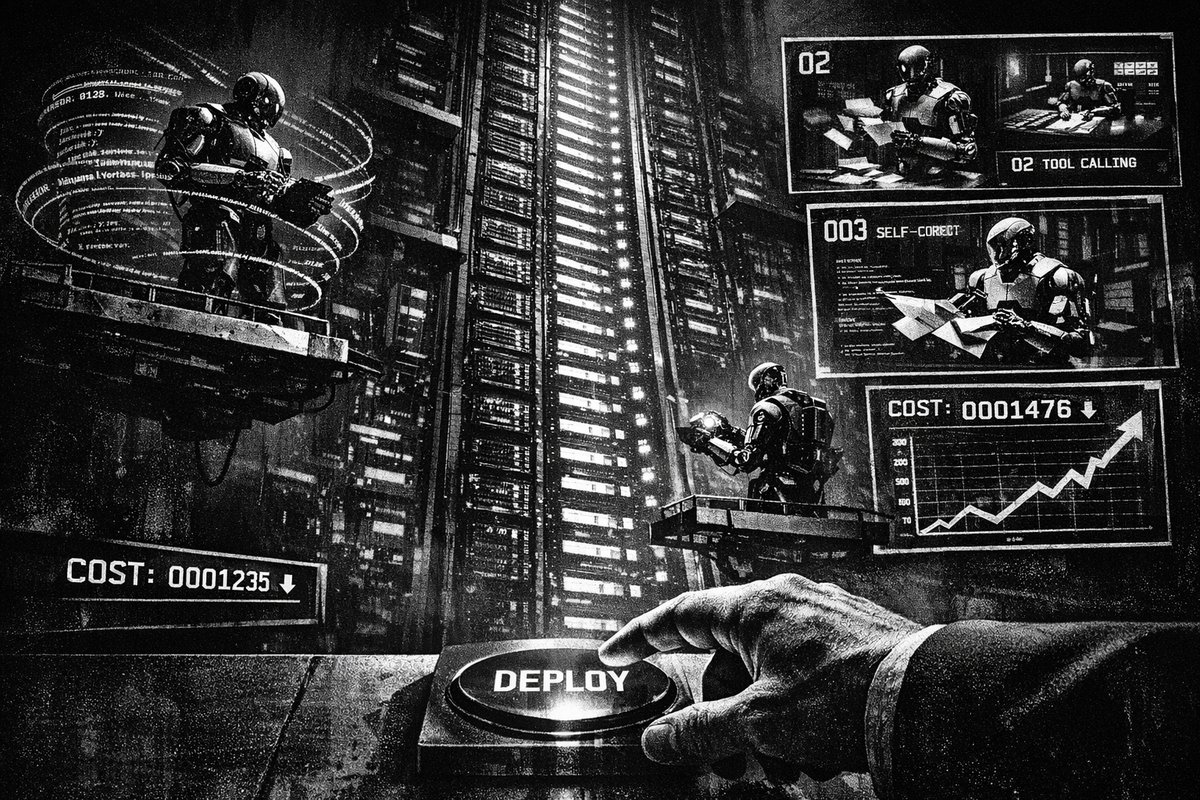
Enterprise Applications That Matter
The real power of Nemotron 3 Ultra emerges in production scenarios that demand sustained multi-step reasoning:
- Agent orchestrators that coordinate multiple sub-agents and manage state across complex tool-calling chains
- Coding agents capable of generating, testing, debugging, and iterating on code across massive repositories
- Deep research systems that synthesize information from multiple sources while maintaining coherent reasoning
- Complex enterprise workflows with decision branching and automated error recovery
These use cases represent a maturation of AI from simple question-answering to genuine autonomous problem-solving—similar to how early calculators evolved into programmable computers.
“Today we’re shipping Nemotron 3 Ultra.\n\nA 550B MoE frontier-intelligence open model built for long-running agents.\n\nIt delivers 5x faster inference and lowers the cost of complex agentic tasks by up to 30% versus other open frontier models.” — @NVIDIAAI
Deployment Reality Check
Deploying Nemotron 3 Ultra on Amazon SageMaker JumpStart requires serious hardware. The supported instances—ml.p5en.48xlarge, ml.p5.48xlarge, or ml.g7e.48xlarge—cost several dollars per hour. This puts the model in enterprise territory, not hobbyist experimentation.
The one-click deployment experience removes infrastructure complexity, but organizations need to budget appropriately. The cost structure resembles early cloud computing adoption—expensive initially, but offering capabilities previously available only to tech giants.
The Broader Context: Internet Traffic Transformation
The timing of this release coincides with a fundamental shift in internet usage patterns. Recent data suggests that bot and AI traffic now accounts for 57.5% of all web requests, with humans representing just 42.5%. This represents a tipping point where the internet has become machine-first rather than human-first.
“This is genuinely wild.\n\nCloudflare just dropped new Radar data showing that bots and AI traffic now account for 57.5% of all HTML webpage requests on their network.\n\nHumans are down to 42.5%.” — @InTheAssembly
This shift demands models like Nemotron 3 Ultra that can handle sustained, autonomous operation at scale. Traditional models designed for human-like interaction patterns aren’t equipped for this machine-dominated landscape.
Market Positioning and Competition
NVIDIA’s decision to release Nemotron 3 Ultra as an open-source model represents a strategic play similar to Google’s release of Android—giving away the software to drive hardware adoption. By making frontier-class AI capabilities freely available, NVIDIA positions its GPU infrastructure as essential for deployment.
The 5x performance improvement and 30% cost reduction create a compelling value proposition that challenges closed-source alternatives. This mirrors the historical pattern of open-source technologies eventually displacing proprietary solutions through superior economics and flexibility.
Implementation Strategy
For organizations considering Nemotron 3 Ultra, the deployment path is straightforward but requires careful resource planning. The SageMaker JumpStart integration handles the complexity of serving infrastructure, but teams need expertise in prompt engineering for agentic workflows and understanding of the model’s specific strengths in multi-turn reasoning scenarios.
The million-token context window enables new architectural patterns for agent systems, allowing for more sophisticated state management and longer-term planning capabilities than previous models supported.
Nemotron 3 Ultra represents more than just another model release—it’s a fundamental shift toward AI systems designed for autonomous operation rather than human assistance. As the internet becomes increasingly machine-first, tools like this become essential infrastructure for the next generation of AI applications.
Published in Stream · Dispatch #414 · June 4, 2026 · 4 min read.
Reply to paolo@mont3.ch - every email gets a human answer within 24h.