OpenAI just dropped GPT-5.5, and the AI landscape shifted overnight. This isn’t another incremental update—it’s a new class of intelligence that fundamentally changes how we think about AI capabilities. The model doesn’t just chat; it completes complex, multi-step tasks with minimal hand-holding, marking what could be the iPhone moment for AI productivity tools.
The Technical Leap: Beyond Conversation
GPT-5.5 represents a paradigm shift from reactive AI to proactive intelligence. Unlike previous models that excelled at single interactions, this system understands complex goals, uses tools autonomously, and self-corrects its work. Think of it as the difference between a brilliant assistant who needs constant direction and one who can take a project brief and deliver results independently.
The technical specifications tell the story:
- Token efficiency: ~40% reduction in token usage despite increased capability
- Pricing structure: $5 per million input tokens, $30 per million output tokens
- Multiple reasoning levels: From “low” to “xhigh” effort modes
- Benchmark dominance: Leads in Terminal-Bench Hard, GDPval-AA, and APEX-Agents-AA
“GPT-5.5 is a new class of intelligence. This intelligence makes it intuitive to use; it completes challenging tasks with little micromanagement. Also very token efficient, and runs with low latency and at scale.” — @gdb
Historically, we’ve seen similar capability jumps in computing. The leap from GPT-5.4 to GPT-5.5 mirrors the transition from command-line interfaces to graphical user interfaces in the 1980s—both represent moments when technology became dramatically more intuitive and capable.
Crushing the Competition: The New Benchmark King
The competitive landscape just got reshuffled. Claude Opus 4.7, which held the crown for coding excellence, has been dethroned. GPT-5.5 doesn’t just edge out competitors—it dominates across multiple categories with surgical precision.
“my god. Openai just dethroned claude 💀 GPT 5.5 crushes opus 4.7 across almost every benchmark. this thing is an absolute beast: -> the new #1 coding model! claude is no longer the top. -> when given a 20-hour software engineering task, GPT 5.5 solves it 73% of the time!” — @cryptopunk7213
The 73% success rate on 20-hour software engineering tasks represents a quantum leap in AI capability. For context, human software engineers typically require multiple iterations and collaborative debugging for complex projects of this scope. GPT-5.5 is approaching human-level project completion rates.
However, the model isn’t without trade-offs. The hallucination rate sits at 86%—significantly higher than Claude Opus 4.7’s 36%. This creates a fascinating dynamic: GPT-5.5 knows more and can do more, but it’s also more likely to fabricate information when uncertain.
The Economics of Intelligence: Cost vs. Capability
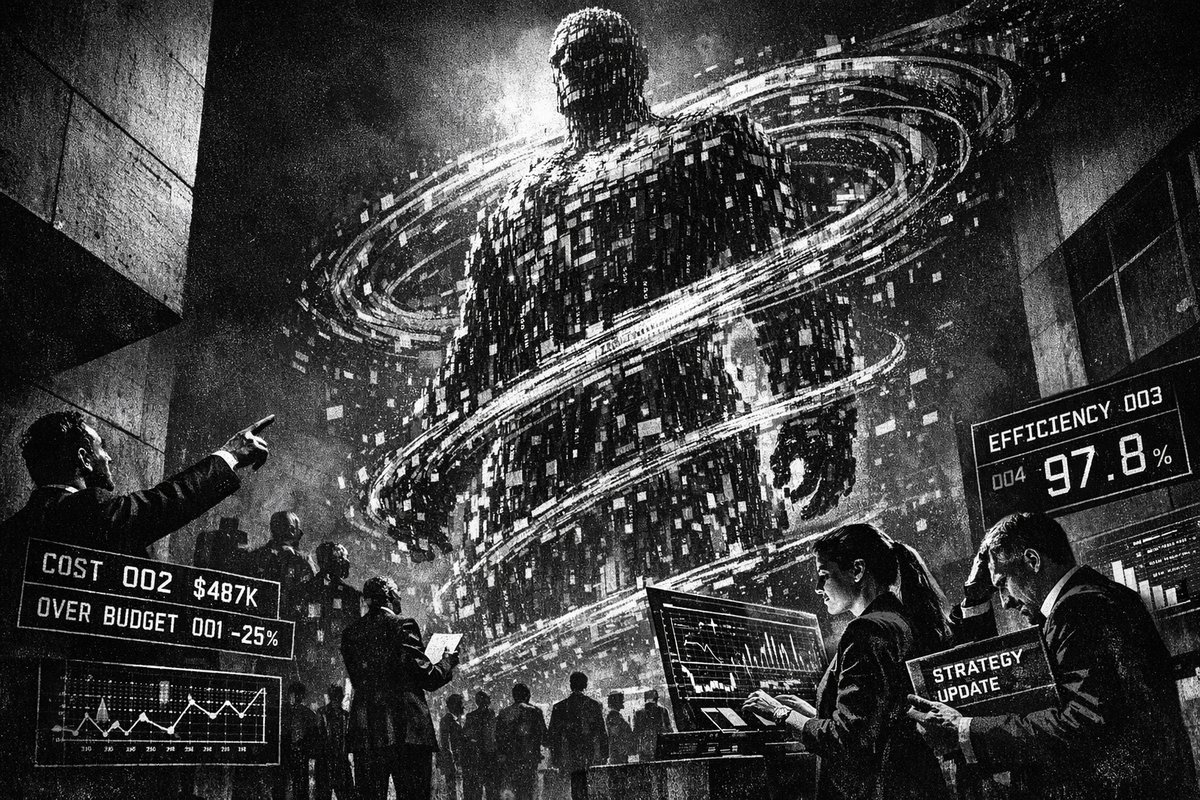
The pricing strategy reveals OpenAI’s confidence in GPT-5.5’s value proposition. At double the cost of GPT-5.4, the model represents a significant investment for organizations. Yet the token efficiency improvements offset much of this increase, resulting in only a 20% net cost increase for many use cases.
This mirrors the mainframe-to-PC transition of the 1970s and 80s. Initially, personal computers were expensive and limited, but their price-to-performance ratio improved rapidly, eventually democratizing computing power. GPT-5.5 may be expensive today, but it’s establishing the performance ceiling that competitors will race to match at lower costs.
“$5 per mil in, $30 per mil out. GPT-5.5 is smart. I’ve been using it for a bit. It’s also weird, hard to wrangle, and too expensive IMO. Double the price of GPT-5.4. 20% more expensive than Opus 4.7.” — @theo
The five reasoning effort levels (xhigh, high, medium, low, non-reasoning) create a cost-intelligence spectrum that organizations can optimize based on specific needs. GPT-5.5 (medium) matches Claude Opus 4.7 (max) at one-quarter the cost—a compelling value proposition for enterprise deployment.
The Self-Improving Machine: AI Building AI
Perhaps most remarkably, GPT-5.5 reportedly “helped build itself.” This represents a pivotal moment in AI development—the first time a model has contributed meaningfully to its own successor’s creation. The implications extend far beyond technical achievement.
Historically, self-improving systems have been theoretical constructs. The Manhattan Project required human scientists to design every component. Apollo 11 needed human engineers to solve every challenge. GPT-5.5 suggests we’re entering an era where AI systems can accelerate their own development cycles.
This capability breakthrough positions GPT-5.5 as more than a product—it’s a development platform that could compress traditional AI research timelines from years to months.
The Road Ahead: Agents and Automation
The release focuses heavily on “powering agents”—AI systems designed to operate independently across multiple applications and workflows. This isn’t about better chatbots; it’s about AI workers capable of managing complex, multi-step processes without human intervention.
The comparison to industrial automation is apt. Just as factory robots didn’t replace human workers overnight but gradually assumed specific tasks, GPT-5.5-powered agents will likely infiltrate knowledge work systematically, starting with routine cognitive tasks and expanding toward creative problem-solving.
GPT-5.5 delivers on the long-promised vision of AI as a force multiplier for human capability. The question isn’t whether this technology will reshape how we work—it’s how quickly organizations will adapt to leverage this new class of intelligence. Early adopters who master GPT-5.5’s capabilities today will likely hold significant advantages as this technology matures and proliferates across industries.
Published in Stream · Dispatch #242 · April 24, 2026 · 4 min read.
Reply to paolo@mont3.ch - every email gets a human answer within 24h.