The financial services industry is witnessing its most radical transformation since the introduction of ATMs in the 1960s. Hyperpersonalization, powered by high-performance computing (HPC), isn’t just another buzzword—it’s the atomic bomb that’s about to detonate across traditional banking models. As value compression suffocates profit margins on basic services, institutions face a stark reality: evolve or become irrelevant.
The Death of One-Size-Fits-All Banking
Traditional banking personalization has been laughably primitive. Imagine if Amazon recommended products based solely on your zip code, or if Netflix suggested movies because you’re between ages 25-54. That’s essentially how banks have operated for decades—crude segmentation masquerading as personalization.
Hyperpersonalization demolishes this approach entirely. Instead of broad demographic buckets, it creates what experts call a “market of one”—treating each customer as a unique financial ecosystem. This mirrors the revolution Google unleashed in advertising, transforming mass marketing into precision-targeted experiences that feel almost telepathic.
The technology leverages real-time data processing to analyze:
- Spending behaviors across multiple channels
- Life event triggers (marriage, home purchase, job changes)
- Contextual decision moments
- Channel preferences and interaction patterns
- External economic indicators affecting individual circumstances
High-Performance Computing: The Engine of Financial Revolution
Here’s where the technical firepower becomes critical. HPC systems can process millions of data points in milliseconds—a capability that transforms banking from reactive to predictive. Think of the computational leap from early weather forecasting to today’s hurricane tracking models. The same exponential improvement is happening in financial services.
High-performance computing enables banks to:
- Process complex algorithms across vast customer datasets simultaneously
- Deliver real-time recommendations during active customer sessions
- Optimize pricing models based on individual risk profiles
- Predict customer needs before customers recognize them themselves
- Orchestrate omnichannel experiences with millisecond response times
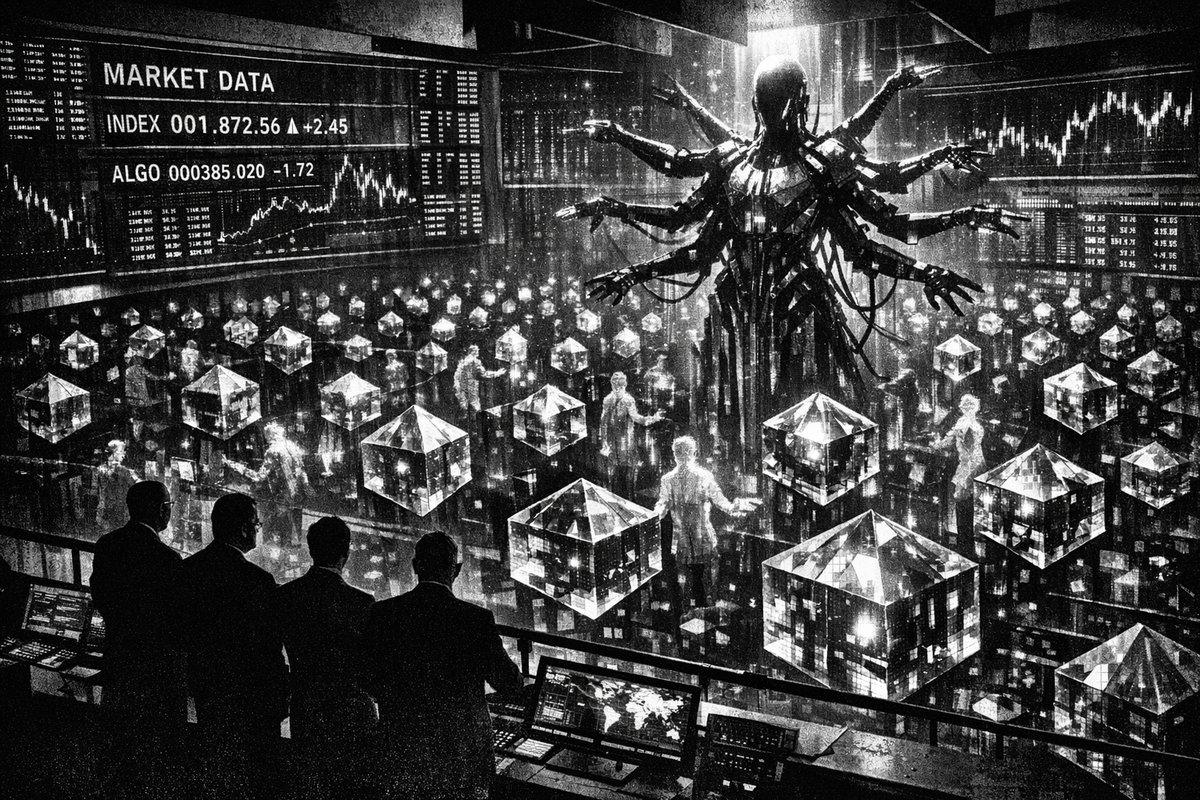
The computational requirements are staggering. A single hyperpersonalization engine might analyze 10,000+ variables per customer decision, processing this across millions of customers simultaneously. Traditional computing infrastructure would buckle under this load—HPC systems treat it as routine operation.
The Competitive Battlefield: Beyond Products to Experiences
The shift mirrors the transformation Apple orchestrated in consumer electronics. Success no longer depends on having the best individual features but on delivering the most intuitive, seamless experience. Banks are discovering that timing and context matter more than interest rates or fee structures.
Consider how this plays out practically: Instead of generic mortgage offers, a hyperpersonalized system might detect that a customer’s spending patterns indicate house-hunting behavior, then deliver a pre-approved mortgage rate precisely when they’re browsing real estate apps. The offer includes closing cost estimates based on their actual financial profile, title insurance options, and even moving service recommendations.
“Branches won’t disappear; they may evolve from transaction centers into trust and advisory centers. For complex products, disputes, and relationship banking, physical presence still matters. AI may reduce routine work, but trust often still likes a human desk.” — @jaideepparasha7
This observation highlights a crucial point: hyperpersonalization doesn’t eliminate human interaction—it makes every interaction more meaningful and valuable.
Historical Parallels: The Railroad Revolution of Finance
The current transformation echoes the railroad revolution of the 1800s. Just as railroads didn’t simply move goods faster—they fundamentally restructured commerce, enabling new business models and destroying established ones—hyperpersonalization isn’t just improving banking efficiency. It’s creating entirely new value propositions.
Banks that master this technology gain the same advantages Standard Oil achieved through vertical integration: control over the entire customer experience pipeline. They can anticipate needs, optimize pricing in real-time, and create switching costs through personalized service quality that competitors cannot match.
The Technical Infrastructure Challenge
Implementing hyperpersonalization requires architectural changes as fundamental as building the transcontinental railroad. Banks must integrate:
- Cloud-native HPC clusters capable of elastic scaling
- Real-time data streaming from hundreds of touchpoints
- Machine learning pipelines that continuously refine personalization models
- API-first architectures enabling instant third-party integrations
- Privacy-preserving computation methods maintaining regulatory compliance
The infrastructure investment is enormous, but the competitive moat it creates is potentially insurmountable. Early adopters could achieve the same market dominance Google gained in search or Facebook established in social networking.
The Disruption Timeline: Move Fast or Get Crushed
Market leaders aren’t waiting for perfect solutions. The “move fast and break things” philosophy that powered Silicon Valley’s dominance is infiltrating financial services. Institutions implementing hyperpersonalization today are establishing competitive advantages that will compound over time.
The window for action is narrowing rapidly. Just as Netflix destroyed Blockbuster not through better stores but by eliminating stores entirely, hyperpersonalized financial services threaten to make traditional banking approaches obsolete.
“AI Is Rewriting Banking Systems Faster Than Ever With Quantum Financial Shift” — @hokanewscom
This acceleration is visible across the industry, with quantum computing and advanced AI pushing the boundaries of what’s computationally possible in real-time financial decision-making.
The Future: Invisible, Predictive, Essential
The end game isn’t better banking—it’s invisible banking. Hyperpersonalized financial services will anticipate needs so accurately that customers rarely need to actively manage money. Bills get optimized automatically, investments adjust based on life changes, and credit becomes available precisely when needed.
This represents the same transformation electricity brought to manufacturing: from noticeable, manual processes to invisible, automatic systems that just work. Banks achieving this level of integration become as essential and invisible as the electrical grid.
The financial institutions that survive this transition won’t be those with the biggest balance sheets, but those with the smartest decision engines. The race isn’t just beginning—it’s accelerating exponentially, and the winners will reshape finance as fundamentally as the Federal Reserve reshaped banking in 1913.
The hyperpersonalization revolution is here. The only question remaining is which institutions will master it first—and which will become historical footnotes in finance’s next chapter.
Published in Stream · Dispatch #251 · April 25, 2026 · 5 min read.
Reply to paolo@mont3.ch - every email gets a human answer within 24h.