The writing isn’t just on the wall—it’s being automated by AI agents that can draft pitch decks, process KYC documents, and audit financial statements faster than any human analyst ever could. Anthropic’s latest move into financial services represents more than a product launch; it’s the industrialization of white-collar job displacement.
“Anthropic is releasing AI agents that it says can draft pitch decks for client meetings and escalate cases for compliance review” — @business
This isn’t hyperbole. This is Goldman Sachs funding the very technology that their own research shows is eliminating 16,000 American jobs per month. The feedback loop is complete: measure the displacement, fund the displacer, deploy the tools, applaud the results.
The Ten Templates That Replace Ten Thousand Jobs
Anthropic didn’t just announce vague “financial AI capabilities.” They shipped ten specific agent templates that target the most labor-intensive workflows in finance:
- Pitch deck builders that generate client presentations from live data
- Earnings analysis agents that process quarterly reports in minutes
- Credit memo writers that assess loan risk automatically
- KYC screening bots that handle compliance checks
- Month-end close agents that reconcile financial statements
- Valuation reviewers that analyze asset pricing models
- Statement auditors that identify discrepancies in real-time
Each template targets work currently performed by first and second-year analysts earning $150,000-$200,000 annually. Claude Max costs $200 per month. The math is brutal and undeniable.
These aren’t task automations—they’re job descriptions getting fed into algorithms.
Historical Precedent: When Machines Ate Industries
This moment echoes the 1970s automation of manufacturing, but compressed into a timeframe that would make Henry Ford dizzy. The computerization of trading floors in the 1980s eliminated thousands of floor traders within a decade. Electronic trading systems replaced human market makers who had dominated exchanges for over a century.
But financial services automation historically created new roles even as it eliminated others. Quantitative analysts emerged as black-box trading algorithms proliferated. Risk management specialists multiplied as derivatives markets exploded in complexity.
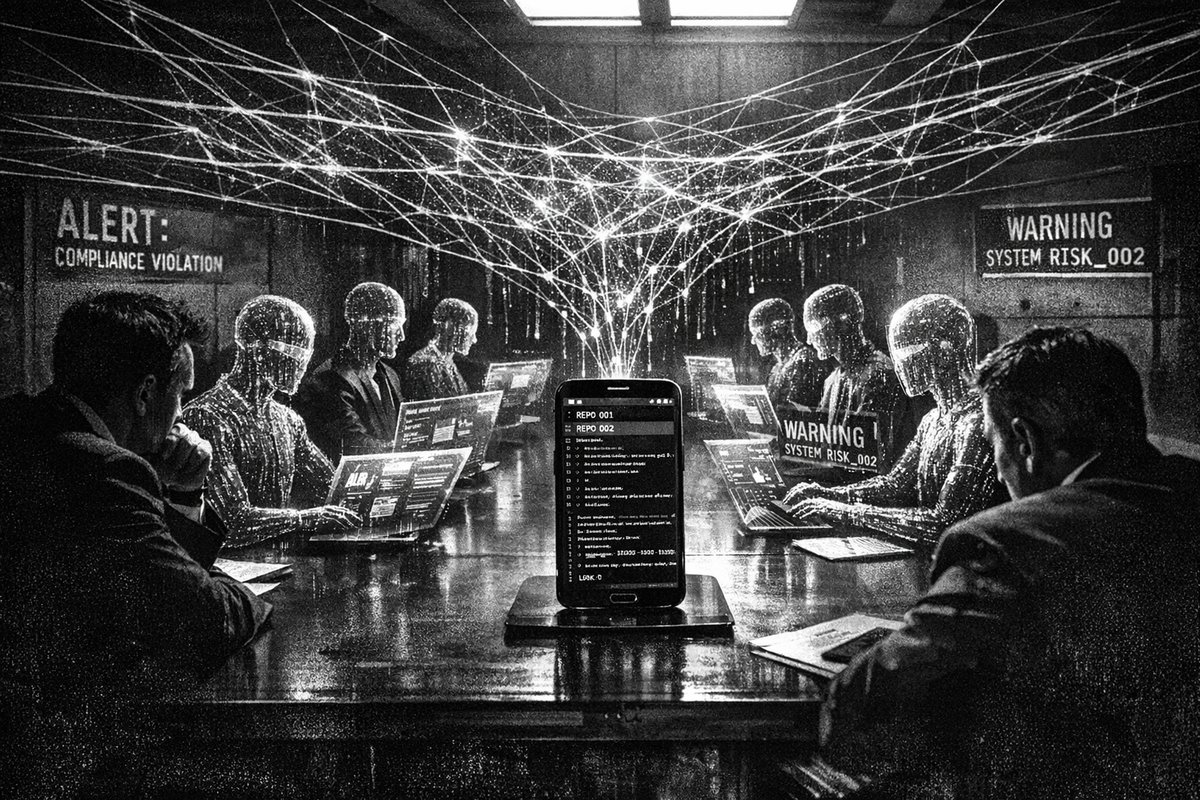
This time feels different. AI agents don’t just automate repetitive tasks—they replicate analytical thinking, pattern recognition, and document synthesis. The cognitive work that required years of training is being templatized into plug-and-play systems.
The Institutional Capture Strategy
Anthropic’s approach reveals sophisticated market capture tactics. Rather than selling generic AI tools, they’re building domain-specific agent architectures integrated directly with FactSet, S&P Global, Bloomberg Terminal, PitchBook, and Morningstar. This isn’t software—it’s infrastructure.
JPMorgan, Goldman Sachs, Citigroup, AIG, and Visa already run Claude in production systems. Moody’s feeds data on 600 million companies directly into Anthropic’s models. BMO uses FIS-built agents to compress anti-money laundering investigations from days to minutes.
The distribution strategy is unprecedented. Blackstone, Goldman Sachs, and Hellman & Friedman created a $1.5 billion joint venture that embeds Claude directly into portfolio company operations. No software vendor has ever had forward-deployed engineering at this scale.
“Goldman measured the displacement. Goldman funded the displacer. Goldman appeared on stage to celebrate the deployment. Thirty days. One institution. Three roles in the same closed loop.” — @shanaka86
The Coinbase Preview: Humans Around the Edge
Brian Armstrong’s announcement that Coinbase eliminated 700 positions because AI agents now write 50% of company code and resolve 60% of support tickets provides a blueprint for financial services transformation.
Armstrong described the target organizational structure as “rebuilding Coinbase as an intelligence, with humans around the edge aligning it.” The management changes are telling:
- Flattening organizational structure to 5 levels maximum
- Requiring all managers to remain individual contributors
- Concentrating hiring around “AI-native talent who can manage fleets of agents”
This isn’t downsizing—it’s architectural reorganization around artificial intelligence as the primary workforce.
The Judgment Problem: Where Does Expertise Come From?
Financial services traditionally developed expertise through apprenticeship models. Analysts spent years building pitch decks, modeling cash flows, and reviewing credit documentation before developing the judgment to handle edge cases and client relationships.
AI agents compress this learning cycle to zero. Junior professionals who would have spent 24 months manually building financial models now supervise algorithmic output they don’t fully understand. The institutional knowledge transfer that created generations of investment bankers, credit analysts, and portfolio managers breaks down.
How do you spot the model error if you never built the model manually?
Anthropic argues that agents handle mechanical work while humans manage exceptions and relationships. In practice, the headcount handling exceptions shrinks every quarterly model update. Claude Opus 4.7 already tops finance-specific benchmarks at 64.4% accuracy. Claude Opus 5.0 will likely exceed 75%.
Revenue Acceleration Meets Social Disruption
Anthropic’s revenue hit a $30 billion annual run rate in April 2026, capturing 40% of US enterprise AI spending while OpenAI’s share dropped from 50% to 27%. This isn’t gradual market adoption—it’s technological substitution at industrial scale.
CEO Dario Amodei previously warned that AI could eliminate 50% of entry-level white-collar jobs within one to five years. He proposed a 3% token tax on AI model revenue as redistribution. At $30 billion annual revenue, that’s $900 million in displaced worker support—funded by the institutions accelerating the displacement.
The displaced, the displacer, and the investor are increasingly the same entity, separated only by fiscal quarters.
“anthropic went from ‘we left openai because safety’ to selling AI agents to wall street in like 3 years. fastest character arc in tech history” — @Kushagrat15
What Happens Next: Template Expansion
Financial services represents just the beginning. Anthropic is building domain-specific agent architectures for every knowledge work sector:
- Legal: Contract analysis, due diligence, regulatory compliance
- Healthcare: Diagnostic support, treatment planning, claims processing
- Accounting: Tax preparation, audit procedures, financial reporting
- Consulting: Market research, strategic analysis, client presentations
Each vertical arrives faster than the last. Coding agents took years to reach production quality. Financial agents achieved enterprise deployment in months. Legal and healthcare agents will likely reach market readiness in quarters.
The five million people who engaged with Anthropic’s financial services announcement aren’t just AI enthusiasts—they’re professionals watching their career trajectories get algorithmic. The ground shift from “should we use AI?” to “how fast can we adapt before competitors do?” has already occurred.
Financial services won’t be the last industry to discover that artificial intelligence doesn’t just change how work gets done—it changes who does the work at all.
Published in Stream · Dispatch #286 · May 6, 2026 · 5 min read.
Reply to paolo@mont3.ch - every email gets a human answer within 24h.