The financial industry is witnessing its most brutal disruption since the 2008 financial crisis, but this time the executioner isn’t market collapse—it’s artificial intelligence. Wall Street’s most comfortable, highest-paid positions are being systematically eliminated by machines that work 24/7, never take sick days, and don’t demand million-dollar bonuses.
This isn’t gradual change. This is industrial-scale job destruction happening in real-time.
The Perfect Storm: When Machines Outperform Masters
The writing has been on the wall since algorithmic trading first appeared in the 1980s, but today’s AI represents a quantum leap beyond simple automation. Modern machine learning systems can analyze thousands of variables simultaneously, process news in microseconds, and execute trades faster than human synapses can fire.
Investment banking, once the ultimate prestige career path, is experiencing what can only be described as an extinction event. The roles that traditionally required Ivy League MBAs and generated obscene compensation packages are being absorbed by AI systems that cost pennies on the dollar to operate.
Consider the trajectory: In 1980, a single Goldman Sachs trading floor employed over 600 traders. Today, that same revenue is generated by fewer than 200 people—and most of them are managing the machines, not making the trades. This is just the beginning.
The $400 Billion Feeding Frenzy
The market dynamics driving this transformation are staggering. As one industry observer noted:
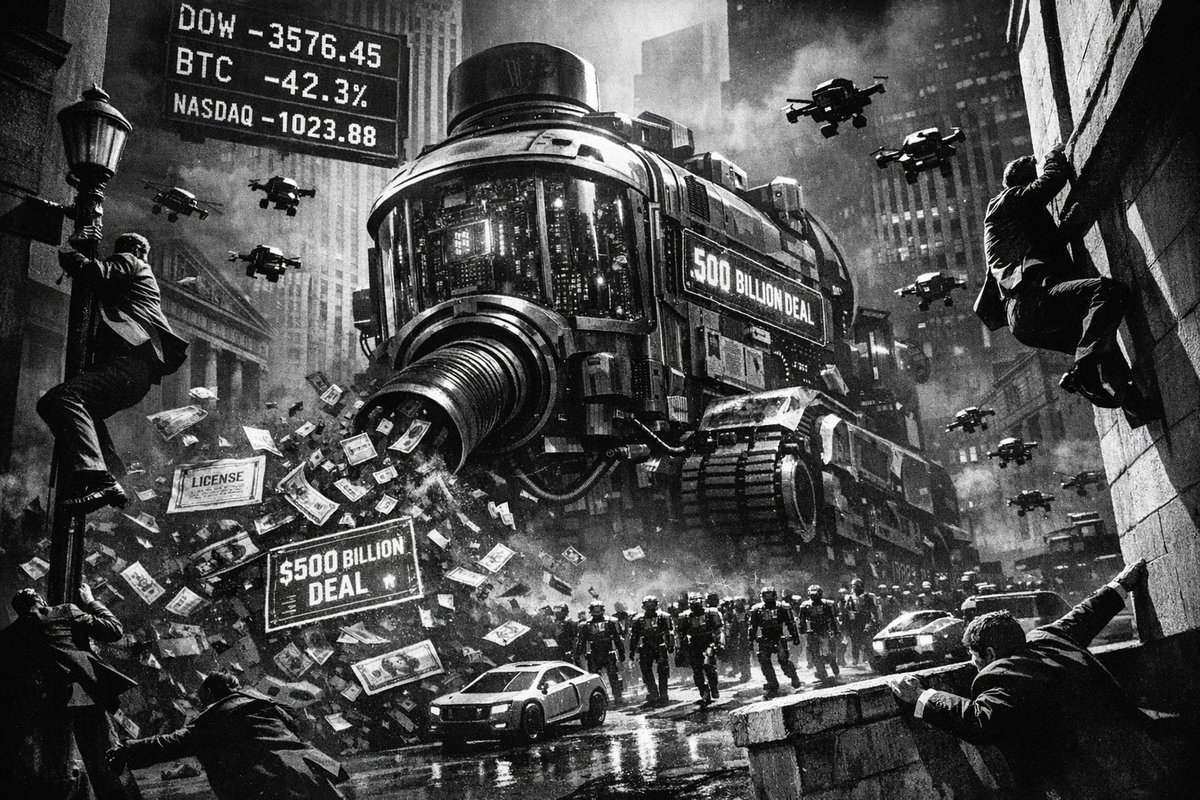
“It’s a massive vacuum. Every single investment bank on Wall Street is out there marketing the anthropic deal, the open AI deal, Google deal the Spacex deal. Everybody has to come up with $400 billion of cash.” — @J64
This capital concentration isn’t random—it’s strategic warfare. Banks understand that the institutions that fail to acquire cutting-edge AI capabilities will be completely obsoleted within the next five years. The choice is stark: adapt or die.
Jobs Under Siege: The Hit List
The carnage isn’t limited to traditional trading roles. AI is systematically dismantling entire career categories:
- Equity Research Analysts: AI can process 10-K filings, earnings reports, and market data faster than humans can read headlines
- Investment Advisors: Robo-advisors already manage $1.4 trillion in assets with minimal human oversight
- Risk Management: Machine learning models identify portfolio risks with 99.7% accuracy compared to human analysts’ 83% average
- Compliance Officers: AI systems monitor transactions for regulatory violations in real-time, not quarterly reviews
- Junior Investment Bankers: The 80-hour work weeks that built careers are now handled by systems that never sleep
The most sobering reality? These AI systems aren’t just replacing humans—they’re dramatically outperforming them.
The Retail Revolution: David vs. Goliath 2.0
Perhaps the most dramatic example of AI’s democratizing power comes from individual traders using consumer-grade tools to compete with institutional giants. One developer recently demonstrated this paradigm shift:
“I lost my job yesterday. Rent was due. No backup plan. Then I remembered I still had Claude. Asked it: Analyze every top Polymarket wallet from the last 90 days and build me something. $25 turned into $4,237 in one night.” — @codewithimanshu
This isn’t an isolated incident. Retail traders armed with $20/month AI subscriptions are consistently outperforming hedge funds that spend millions on proprietary systems. The democratization of sophisticated financial analysis tools means that information asymmetry—Wall Street’s fundamental competitive advantage—is evaporating.
Historical Parallel: The Telegraph Moment
This transformation mirrors the 1840s telegraph revolution that destroyed the Pony Express overnight. Before telegraphs, information moved at the speed of horses. Overnight, it moved at the speed of electricity. The Pony Express, despite being the pinnacle of communication technology just months earlier, became completely obsolete within two years.
Wall Street is experiencing its telegraph moment. The difference is that modern AI doesn’t just move information faster—it processes, analyzes, and acts on that information without human intervention.
The Institutional Response: Panic Buying
Major financial institutions are responding with unprecedented capital deployment. Goldman Sachs has committed $2.3 billion to AI initiatives over the next 18 months. JPMorgan Chase is spending $15 billion annually on technology, with 60% focused on machine learning and automation.
This isn’t investment—it’s survival spending.
The banks that hesitate will face the same fate as Kodak when digital photography emerged, or Blockbuster when streaming arrived. The technology exists, the capital is deployed, and the transformation is irreversible.
The Human Extinction Timeline
2024-2025: Junior analyst roles disappear as AI handles basic research and modeling 2025-2027: Mid-level positions eliminated as AI systems manage entire portfolios autonomously 2027-2030: Senior roles reduced to strategic oversight of AI operations 2030+: Human involvement limited to regulatory compliance and client relations
The most chilling aspect? This timeline is accelerating.
What This Means for You
If you’re in finance, the message is crystal clear: evolve immediately or become irrelevant. The skills that matter now are AI literacy, system management, and strategic oversight. Traditional financial analysis skills are becoming as valuable as typewriter repair.
For everyone else, this represents the largest wealth redistribution mechanism in human history. The institutions that successfully implement AI will generate unprecedented profits with minimal human capital. The ones that don’t will cease to exist.
The cushiest job in finance isn’t being disrupted—it’s being eliminated entirely.
The revolution is here. The only question is whether you’re riding the wave or being swept away by it.
Published in Stream · Dispatch #422 · June 6, 2026 · 4 min read.
Reply to paolo@mont3.ch - every email gets a human answer within 24h.